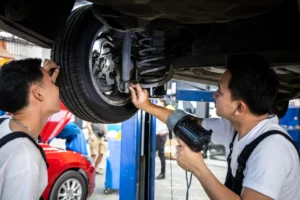
Your Mercedes-Benz is engineered to deliver smooth acceleration, controlled handling and confident braking.
But even a well-maintained Mercedes can develop brake problems over time.
Sometimes the first sign is a small squeak when you press the brake pedal. Other times, you may notice steering-wheel vibration, a soft pedal, a warning message or a change in stopping performance.
These symptoms shouldn’t automatically be assumed to mean that the brake pads need replacing. The braking system contains several components, and the actual cause needs to be identified.
In this guide, we’ll explain the most common Mercedes-Benz brake problems, what different symptoms can mean, when a brake warning requires urgent attention, and what a professional inspection involves in Singapore.
Quick Answer: What Are the Most Common Mercedes Brake Problems?
Common Mercedes-Benz brake problems include:
- Worn brake pads
- Worn or damaged brake discs
- Brake squeaking or grinding
- Brake pedal vibration
- Soft or spongy brake pedal
- Brake warning lights
- Longer stopping distance
- Sticking brake calipers
- Brake fluid problems
- Uneven brake pad wear
A Mercedes that is grinding, pulling while braking, experiencing major loss of braking performance, or showing a serious brake warning should be inspected promptly.
How Does the Mercedes-Benz Braking System Work?
Your Mercedes braking system uses multiple components that work together.
Depending on the specific model and braking configuration, these can include:
- Brake pads
- Brake discs
- Brake calipers
- Brake fluid
- Hydraulic components
- ABS components
- Electronic braking systems
- Brake wear sensors
When you press the brake pedal, the braking system converts that pedal input into friction at the wheels, helping slow the vehicle.
Because several components are involved, the same symptom can sometimes have several possible causes.
That’s why replacing one part based only on a symptom isn’t always the right solution.
10 Warning Signs of Mercedes-Benz Brake Problems


1. Your Mercedes Brakes Are Squeaking
A squeaking sound when braking is one of the most common complaints from car owners.
Brake squeaking can have several causes, including:
- Brake pad material
- Brake pad wear
- Moisture
- Dust or debris
- Brake disc surface condition
- Brake component movement
- Other brake-related issues
Occasional noise doesn’t necessarily mean that a major component has failed.
However, persistent or worsening brake noise should be inspected.
Squeaking vs grinding
There’s an important difference between the two.
Squeaking:
Can occur because of brake pad material, surface conditions or wear.
Grinding:
Can indicate severe wear or unwanted contact between braking components.
If your Mercedes produces a harsh grinding sound, don’t ignore it.
2. Your Mercedes Makes a Grinding Noise
A grinding noise during braking deserves prompt attention.
It may indicate that brake components are significantly worn or that another component is making abnormal contact.
Continuing to drive without identifying the cause can potentially result in additional wear or damage.
If you hear grinding:
- Avoid unnecessary driving
- Have the braking system inspected
- Don’t assume that replacing pads alone will solve the problem
The inspection should determine the condition of both the brake pads and discs, along with the relevant components.
3. Steering Wheel Vibrates When Braking
Does your Mercedes drive smoothly but the steering wheel starts vibrating when you brake?
This can be associated with issues involving the braking system, such as:
- Uneven brake disc surfaces
- Disc runout
- Uneven pad deposits
- Caliper-related issues
However, steering vibration isn’t always caused by the brakes.
Other possibilities can include:
- Wheels
- Tyres
- Suspension
- Steering components
The key is timing.
If the vibration occurs mainly when braking, the brake system should be one of the areas inspected.
4. The Brake Pedal Feels Soft or Spongy
Your Mercedes brake pedal should have a predictable and controlled feel.
If it suddenly feels:
- Soft
- Spongy
- Lower than normal
- Unusually easy to press
- Different from its normal feel
the braking system should be checked.
Possible causes can include:
- Air in the hydraulic system
- Brake fluid issues
- Hydraulic system faults
- Leaks
- Other braking-system problems
A significant change in brake pedal feel should not be ignored.
5. Your Mercedes Takes Longer to Stop
One of the most important brake warning signs is a noticeable change in stopping performance.
You might feel:
“My Mercedes doesn’t stop as quickly as it used to.”
Possible causes can include:
- Worn brake pads
- Worn brake discs
- Brake fluid problems
- Caliper problems
- Tyre issues
- Other braking-system faults
If braking performance has noticeably changed, arrange an inspection instead of continuing to drive normally.
6. Mercedes Brake Warning Light Is On
Modern Mercedes-Benz vehicles use electronic monitoring systems to detect different vehicle conditions.
A brake-related warning can potentially relate to:
- Brake pad wear
- Brake fluid
- Parking brake
- ABS
- Electronic braking systems
- Other brake-related faults
The exact meaning depends on the Mercedes model and the specific warning message.
What should you do?
Don’t rely only on the colour of the warning.
Read the exact dashboard message and consider the vehicle’s braking behaviour.
If the warning is accompanied by reduced braking performance, a soft pedal or another serious symptom, seek professional assistance promptly.
7. Your Mercedes Pulls to One Side When Braking
If your Mercedes moves noticeably to the left or right when you brake, something may need investigation.
Possible causes include:
- Uneven brake operation
- Caliper problems
- Brake pad issues
- Tyre problems
- Wheel alignment
- Suspension or steering components
A vehicle pulling during braking shouldn’t simply be corrected by adjusting the wheel alignment without first checking the braking and related systems.
8. One Wheel Gets Unusually Hot
If one wheel area becomes significantly hotter than the others after normal driving, it can sometimes indicate that a brake component isn’t releasing properly.
A possible cause is a sticking brake caliper or related component.
Other symptoms may include:
- Burning smell
- Brake noise
- Reduced fuel efficiency
- Uneven brake pad wear
- Vehicle pulling
If you notice a strong burning smell or excessive heat from a wheel, allow the vehicle to cool safely and arrange an inspection.
Avoid touching hot brake components directly.
9. Uneven Brake Pad Wear
Brake pads should wear progressively, but significant differences in wear can indicate another problem.
Possible causes include:
- Caliper issues
- Guide or sliding-component problems
- Uneven disc condition
- Mechanical restrictions
- Other braking-system faults
If one brake pad is wearing much faster than another, the cause should be investigated.
Simply replacing the worn pad may not solve the underlying issue.
10. Your Mercedes Brake Pedal Pulsates
A pulsing or vibrating brake pedal can indicate an issue with the braking system.
Possible causes include:
- Brake disc condition
- Uneven pad deposits
- Brake system components
- Other mechanical issues
However, pedal pulsation should be diagnosed rather than automatically attributed to “warped discs.”
A proper inspection can determine whether the discs, pads, calipers or another component is responsible.
Mercedes Brake Problems: Symptoms at a Glance
| Warning Sign | Possible Causes | What to Do |
|---|---|---|
| Squeaking | Pad material, wear, surface condition | Inspect if persistent |
| Grinding | Severe wear or component contact | Inspect promptly |
| Steering vibration | Brake, wheel, tyre or suspension issue | Diagnose the cause |
| Soft brake pedal | Fluid/hydraulic issue | Inspect promptly |
| Longer stopping distance | Pads, discs, fluid or system fault | Brake inspection |
| Pulling while braking | Caliper, brake, tyre or suspension issue | Inspection required |
| Brake warning light | Brake/electronic system issue | Check warning message |
| Burning smell | Possible overheating/sticking component | Stop and inspect |
| Uneven pad wear | Caliper or mechanical issue | Find underlying cause |
| Pedal pulsation | Disc/pad or mechanical issue | Professional diagnosis |
Note: These are possible causes, not a diagnosis.
Mercedes Brake Pads: When Do They Need Replacing?
Brake pads gradually lose friction material through normal use.
The replacement requirement depends on:
- Pad thickness
- Vehicle model
- Driving conditions
- Driving style
- Brake system
- Wear sensor information
- Manufacturer specifications
Many Mercedes-Benz models use brake-pad wear monitoring, but the exact system varies by model and year.
A brake inspection can determine the remaining pad material and whether replacement is required.
Mercedes Brake Discs: When Should They Be Replaced?
Brake discs also wear over time.
A professional inspection can check for:
- Excessive wear
- Scoring
- Cracks
- Surface irregularities
- Corrosion
- Thickness concerns
- Other damage
Brake discs don’t automatically need replacement whenever brake pads are replaced.
The correct decision depends on their actual condition and the manufacturer’s specifications for the vehicle.
Why Do Mercedes Brakes Squeak in Singapore?
Singapore driving can involve frequent:
- Traffic lights
- Stop-and-go traffic
- Short journeys
- Repeated braking
- Urban congestion
Brake noise can therefore occur for various reasons, including normal operating conditions, brake pad material, moisture, dust and component wear.
However, if the noise becomes persistent, louder or is accompanied by reduced braking performance, it’s worth having the system inspected.
Can You Drive a Mercedes With Brake Problems?
It depends on the symptom and severity.
A minor intermittent noise doesn’t necessarily mean immediate brake failure.
However, certain symptoms require much more urgent attention.
Avoid unnecessary driving if you experience:
- Major loss of braking power
- A very soft or sinking brake pedal
- Severe grinding
- Strong burning smell
- Visible brake fluid leakage
- Severe pulling while braking
- A serious brake warning accompanied by poor braking
- Other signs of possible brake failure
If you believe the vehicle may not stop safely, arrange appropriate roadside assistance rather than taking unnecessary risks.
How Are Mercedes Brake Problems Diagnosed?
A proper brake inspection should examine the entire relevant system rather than simply checking the brake pads.
Step 1: Discuss the symptoms
A technician may ask:
- When did the problem begin?
- Does the noise happen every time you brake?
- Does the vibration happen only at certain speeds?
- Does the vehicle pull?
- Has a warning light appeared?
- Has any brake work recently been performed?
These details can help narrow down the possible causes.
Step 2: Visual inspection
The braking system can be checked for visible signs of:
- Pad wear
- Disc wear
- Leakage
- Damage
- Abnormal component condition
Step 3: Component inspection
Depending on the symptoms, technicians may inspect:
- Brake pads
- Brake discs
- Calipers
- Brake lines
- Brake fluid
- Related hardware
Step 4: Electronic diagnostics
If the vehicle displays an ABS, brake or electronic-system warning, diagnostic equipment may be required.
Step 5: Road-test assessment
Where appropriate and safe, a road test can help reproduce braking symptoms.
The goal is to identify:
What is happening → Why it is happening → What repair is actually required.
How Much Does Mercedes Brake Repair Cost in Singapore?
There isn’t one fixed price for Mercedes brake repair.
The total cost can depend on:
- Mercedes model
- Model year
- Brake system
- Brake pad type
- Brake disc condition
- Number of components requiring replacement
- Parts selected
- Labour
- Diagnostic requirements
For example, replacing brake pads is a very different job from repairing a sticking caliper or replacing multiple braking components.
The best approach:
Diagnose first → inspect the components → identify the required repair → quote accordingly.
This helps avoid replacing parts unnecessarily.
Mercedes Brake Pads vs Brake Discs: Do You Always Need Both?
No.
Whether both need replacement depends on their individual condition.
For example:
Worn pads + acceptable discs:
Brake pads may be all that is required.
Worn pads + discs below specification or significantly damaged:
Both may need replacement.
The correct decision should be based on inspection and applicable vehicle specifications.
How to Prevent Mercedes Brake Problems
You can’t prevent every brake problem, but regular attention can help identify wear early.
1. Don’t ignore unusual brake noises
A persistent squeak or grinding sound should be investigated.
2. Pay attention to pedal feel
If the pedal suddenly feels different, get it checked.
3. Check warning messages
Don’t simply clear a warning without understanding why it appeared.
4. Inspect brakes during servicing
Regular inspection can identify worn components before they become severe.
5. Monitor braking performance
If your Mercedes starts taking longer to stop, arrange an inspection.
6. Use appropriate brake components
Brake components should meet the requirements of the specific Mercedes model.
7 Questions to Ask Before Approving a Mercedes Brake Repair
Before approving a brake repair, you can ask the workshop:
1. Which brake component is causing the problem?
2. How much brake pad material remains?
3. Are the brake discs within the required specification?
4. Is there uneven brake wear?
5. Is the caliper operating correctly?
6. Does anything else need inspection?
7. What exactly is included in the repair quote?
Understanding the diagnosis helps you make an informed decision about the repair.
Frequently Asked Questions About Mercedes Brake Problems
What are the most common Mercedes brake problems?
Common problems include worn brake pads, worn brake discs, squeaking or grinding, brake vibration, soft pedals, warning lights, uneven braking and caliper-related issues.
Why are my Mercedes brakes squeaking?
Brake squeaking can be caused by brake pad material, moisture, dust, wear, disc condition or other components. Persistent or worsening noise should be inspected.
Why does my Mercedes shake when braking?
Brake vibration can be associated with disc or pad conditions, but wheel, tyre, steering and suspension problems can also cause similar symptoms.
Why does my Mercedes brake pedal feel soft?
A soft or spongy brake pedal can be associated with brake fluid or hydraulic-system issues, air in the system or another braking fault. A significant change in pedal feel should be checked promptly.
How do I know if my Mercedes brake pads need replacing?
Warning signs can include pad-wear messages, squeaking, grinding, reduced braking performance or visible wear. An inspection can confirm the actual remaining pad material.
Can I drive with the Mercedes brake warning light on?
The answer depends on the specific warning and how the vehicle is behaving. If the warning is accompanied by reduced braking performance, a soft pedal or other serious symptoms, avoid unnecessary driving and seek professional assistance.
Do Mercedes brake pads have wear sensors?
Many Mercedes models have brake-pad wear monitoring, but the exact system varies by model and year.
Should Mercedes brake pads and discs be replaced together?
Not always. The decision depends on the condition and specifications of both components.
How often should Mercedes brakes be inspected?
Brake condition should be checked during routine servicing and whenever you notice changes in braking performance, noise, pedal feel or warning messages.
Mercedes Brake Problems? Talk to ContiExpert
Your brakes are one of the most important safety systems on your Mercedes-Benz.
If you’re experiencing:
Squeaking → Grinding → Vibration → Soft pedal → Warning light → Reduced braking performance
don’t simply ignore the symptom.
A proper inspection can help identify the actual cause and determine what repair your Mercedes needs.
🚗 Need Your Mercedes Brakes Checked?
Contact ContiExpert through WhatsApp to discuss your Mercedes brake symptoms and arrange the next step.
WhatsApp CTA:
“Hi ContiExpert, I have a Mercedes-Benz with a brake problem and would like to have it checked.”