You replace your car battery, everything seems fine, and then a few days later the car struggles to start again.
If your BMW, Mercedes-Benz, Audi or Volkswagen repeatedly develops a flat battery, replacing it again may not solve the underlying problem.
A battery that keeps losing charge can indicate a charging-system fault, excessive electrical drain, a battery that is unsuitable or deteriorating, or an issue with how the vehicle manages electrical power.
For European car owners in Singapore, identifying the cause early can help prevent repeated starting problems and unnecessary replacement costs.
Quick Answer: Why Does My European Car Battery Keep Dying?
A European car battery may repeatedly go flat because of:
- An ageing or damaged battery.
- An alternator or charging-system problem.
- Electrical components continuing to draw power while the vehicle is parked.
- Frequent short journeys that do not adequately replenish the battery.
- Loose, corroded or damaged battery connections.
- Incorrect battery specification or registration on vehicles that require battery management procedures.
A battery and charging-system test is usually a sensible starting point. If the battery is healthy, further investigation may be needed to identify the reason it is losing charge.
1. The Battery Is Old or Deteriorating
Car batteries gradually lose their ability to store and deliver electrical energy.
As a battery ages, it may struggle to provide enough power to start the engine, especially after the vehicle has been parked for several hours.
Common warning signs
- Slow engine cranking.
- Repeated difficulty starting.
- Electrical systems behaving inconsistently.
- A battery that repeatedly needs external charging.
- A battery warning or related dashboard message.
Age alone does not prove that a battery has failed. A proper test can assess its condition and help determine whether replacement is necessary.
2. The Alternator Is Not Charging Properly
The alternator helps supply electrical power while the engine is running and replenishes the battery’s charge.
If the alternator or charging system is not working correctly, the battery may gradually become depleted even if it is relatively new.
Possible symptoms include:
- A battery or charging-system warning light.
- Repeated flat-battery incidents.
- Electrical malfunctions.
- Starting problems after driving.
Charging-system faults can involve more than the alternator itself. Wiring, connections, belts and vehicle-specific charging controls may also require inspection.
Important: If a battery warning light appears while driving, arrange a prompt assessment. If electrical systems begin failing or the vehicle is at risk of stalling, stop safely and seek assistance.
3. Something Is Draining the Battery While Parked
A vehicle continues to use a small amount of electrical power when switched off. Security systems and other essential functions may remain active.
However, if a component draws excessive power while the car is parked, the battery may lose charge faster than expected.
Potential causes include:
- An electronic module that does not enter sleep mode correctly.
- An aftermarket accessory.
- A faulty relay or electrical component.
- A wiring fault.
- Another abnormal parasitic electrical draw.
Finding the source can require specialist testing. Simply disconnecting random fuses or replacing electrical components without a diagnosis may create additional problems.
4. Frequent Short Trips Can Affect Battery Charge
If you regularly drive only short distances, the battery may not have enough opportunity to recover the energy used during starting.
This can be particularly relevant when the vehicle also operates several electrical systems during each journey.
Repeated short trips do not automatically mean the battery will fail, but they can contribute to a low state of charge under certain conditions.
If your driving pattern consists mainly of short journeys, ask a workshop whether battery testing and an appropriate charging routine would be beneficial for your vehicle.
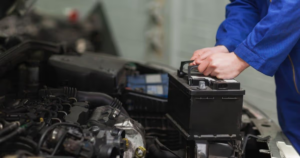
5. Loose or Corroded Battery Connections
The battery may be in good condition but still have difficulty delivering power if its connections are loose, damaged or affected by corrosion.
Poor connections can interfere with starting and charging.
A technician can inspect the battery terminals, cables and relevant connections to determine whether cleaning, adjustment or repair is needed.
Avoid touching battery terminals or electrical connections if you are unsure how to work safely with the vehicle’s electrical system.
6. The Wrong Battery or Incorrect Battery Registration
Some modern European vehicles use battery-management systems that monitor battery condition and charging behaviour.
Depending on the vehicle, replacing the battery may require the correct battery specification and a battery registration or adaptation procedure.
If the wrong battery type is installed, or a required procedure is omitted, charging behaviour may not operate as intended.
Always check the manufacturer’s requirements for your specific model rather than assuming that any battery with a suitable physical size will be appropriate.
7. Extreme Electrical Demand and Vehicle Settings
Modern European cars contain numerous electronic systems, including infotainment, security, comfort and driver-assistance features.
High electrical demand, combined with an already weak battery or another charging problem, may contribute to starting difficulties.
The vehicle’s design and power-management system determine which features remain active when parked. A technician can check whether unusual electrical consumption is occurring.
Battery Problem or Alternator Problem?
These faults can produce similar symptoms, which is why testing is important.
| Observation | What it may indicate |
|---|---|
| Slow cranking after the car has been parked | Weak battery, low charge or electrical drain |
| Battery repeatedly goes flat overnight | Battery deterioration or abnormal parked-vehicle power draw |
| Battery warning light while driving | Charging-system fault |
| New battery goes flat repeatedly | Charging issue, electrical drain or connection problem |
| Electrical issues while the engine is running | Charging, wiring or other electrical fault |
| Car starts after charging but later fails again | Underlying battery, charging or drain issue |
These symptoms help guide diagnosis but cannot identify the faulty component on their own.
How to Prevent Repeated Battery Problems
A few sensible maintenance habits can help reduce the risk of unexpected starting trouble.
Check the battery condition
Have the battery tested when starting becomes slower or the vehicle displays relevant warnings. Do not wait for repeated failures before investigating.
Investigate repeated flat batteries
If a battery has gone flat more than once, ask for both battery and charging-system checks. A parasitic-draw test may be appropriate if the battery loses charge while parked.
Use the correct replacement battery
Confirm the battery type and specification required for your vehicle. Ask whether battery registration or adaptation is necessary after replacement.
Address warning lights promptly
A charging-system warning should not be ignored simply because the engine still runs.
Follow vehicle-specific maintenance guidance
European models can have different electrical architectures and battery-management requirements. Use the owner’s manual and suitable technical guidance for your vehicle.
Frequently Asked Questions
Why does my European car battery keep dying even after replacement?
Possible causes include a charging-system fault, an electrical drain while parked, poor battery connections or an incorrect battery specification. Testing can help determine why the replacement battery is losing charge.
How do I know if my alternator is faulty?
A battery warning light, repeated flat-battery incidents and electrical problems may indicate a charging issue. A workshop can test charging performance and related components to confirm the cause.
Can short journeys drain a car battery?
Frequent short trips may prevent the battery from fully recovering the energy used during starting. The effect depends on the vehicle, battery condition, electrical demand and driving pattern.
Should I disconnect the battery when I park for a long time?
Do not assume this is the best solution for a modern European car. Disconnecting the battery can affect vehicle electronics, security systems and settings. Follow the manufacturer’s guidance or ask a qualified workshop about suitable storage and charging options.
Does a new battery guarantee that my car will start reliably?
No. A new battery cannot compensate for an alternator fault, excessive electrical drain, poor connections or other starting-system problems.
European Car Battery and Electrical Diagnostics in Singapore
If your car battery keeps going flat, identifying the underlying cause is more useful than repeatedly replacing the battery.
Volt Autocare provides European car servicing, diagnostics and repairs for Mercedes-Benz, BMW, Audi and other supported vehicles. A suitable inspection can help determine whether the issue involves the battery, charging system or another electrical component.
Explore Volt Autocare’s European car services to learn more or arrange an inspection.
Contact Volt Autocare — Specialist European Car Servicing and Diagnostics in Singapore.