European vehicles are known for their outstanding engineering, luxury, safety, and driving performance. Whether you own a BMW, Mercedes-Benz, Audi, Volkswagen, MINI, Porsche, Volvo, Land Rover, or Skoda, regular maintenance is the key to keeping your vehicle running smoothly and avoiding expensive repairs.
Unlike many standard vehicles, European cars are equipped with advanced engines, sophisticated electronics, turbochargers, and intelligent safety systems that require specialised care. Missing routine maintenance can lead to reduced performance, higher fuel consumption, unexpected breakdowns, and costly repairs.
This comprehensive maintenance checklist will help you understand exactly what should be inspected and serviced throughout the year to keep your European car in excellent condition.
Why Regular Maintenance Is Important
Routine maintenance is about much more than changing engine oil.
Professional servicing helps to:
- Maintain engine performance
- Improve fuel efficiency
- Reduce repair costs
- Extend vehicle lifespan
- Increase reliability
- Improve safety
- Protect resale value
- Detect hidden problems early
Preventive maintenance is always more affordable than major mechanical repairs.
Daily & Weekly Maintenance Checklist
These quick checks take only a few minutes but can help detect problems before they become serious.
Check for Fluid Leaks
Look underneath your vehicle for signs of:
- Engine oil
- Coolant
- Brake fluid
- Transmission fluid
- Power steering fluid (if applicable)
Fresh leaks should always be inspected promptly.
Check Dashboard Warning Lights
Never ignore warning lights such as:
- Check Engine Light
- Oil Pressure Warning
- Battery Warning
- Brake Warning
- ABS Warning
- Engine Temperature Warning
These lights often indicate problems that require professional attention.
Listen for Unusual Noises
Pay attention to sounds such as:
- Engine knocking
- Brake squealing
- Grinding noises
- Suspension clunks
- Steering vibrations
Early diagnosis often prevents expensive repairs.
Monthly Maintenance Checklist
Check Engine Oil Level
Engine oil lubricates and protects your engine.
Low oil levels may indicate:
- Oil leaks
- Oil consumption
- Engine wear
Top up only with the manufacturer-recommended oil if necessary.
Check Coolant Level
Your cooling system prevents engine overheating.
Inspect:
- Coolant level
- Coolant reservoir
- Visible leaks
Never remove the coolant cap while the engine is hot.
Check Tyre Pressure
Correct tyre pressure improves:
- Safety
- Fuel economy
- Tyre lifespan
- Handling
Check tyre pressures at least once every month.
Inspect Tyre Tread
Look for:
- Uneven wear
- Cracks
- Low tread depth
- Sidewall damage
Uneven wear may indicate suspension or wheel alignment issues.
Check Exterior Lights
Ensure all lights function correctly:
- Headlights
- Brake lights
- Tail lights
- Reverse lights
- Turn signals
- Fog lights
Good visibility improves safety.
Inspect Windscreen Wipers
Replace worn wiper blades if they:
- Leave streaks
- Skip across the windscreen
- Produce noise
Good visibility is essential during heavy rain.
Every 10,000–15,000 km (or Every 12 Months)
This is the most important scheduled service for most European vehicles.
Professional servicing should include:
Engine Oil Replacement
Fresh engine oil reduces wear and protects internal engine components.
Oil Filter Replacement
A clean oil filter removes contaminants from the engine oil.
Computer Diagnostic Scan
Professional diagnostics identify hidden faults before warning lights appear.
Battery Inspection
Technicians check:
- Battery health
- Charging system
- Alternator performance
Weak batteries can affect modern electronic systems.
Brake Inspection
Inspect:
- Brake pads
- Brake discs
- Brake fluid
- Brake hoses
- Brake calipers
Safe brakes are essential for every journey.
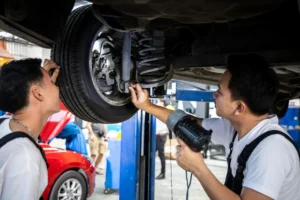
Suspension Inspection
Check:
- Shock absorbers
- Bushings
- Ball joints
- Control arms
Healthy suspension improves comfort and handling.
Steering Inspection
Inspect:
- Steering rack
- Tie rods
- Steering joints
Any looseness should be repaired promptly.
Fluid Top-Up
Check and top up:
- Coolant
- Brake fluid
- Windscreen washer fluid
- Power steering fluid (where applicable)
Every 30,000 km
Additional maintenance usually includes:
Engine Air Filter Replacement
A clean air filter improves:
- Engine performance
- Fuel economy
- Engine efficiency
Cabin Air Filter Replacement
A new cabin filter provides:
- Cleaner air
- Better air-conditioning performance
- Reduced dust inside the cabin
Wheel Alignment
Correct wheel alignment:
- Reduces tyre wear
- Improves handling
- Increases fuel efficiency
Tyre Rotation
Rotating tyres promotes even wear and extends tyre life.
Every 60,000 km
Major servicing may include:
- Spark plug replacement
- Brake fluid replacement
- Transmission fluid service
- Coolant inspection
- Drive belt inspection
- Fuel system inspection
These services help maintain long-term reliability.
Every 100,000 km
High-mileage vehicles should receive a more comprehensive inspection.
Components commonly inspected include:
- Engine mounts
- Cooling system
- Suspension components
- Water pump
- Radiator
- Hoses
- Fuel injectors
- Turbocharger
- Exhaust system
Preventive replacement of ageing components reduces the risk of unexpected breakdowns.
Air-Conditioning Maintenance
Singapore’s hot climate places extra demand on your air-conditioning system.
Regular servicing includes:
- Refrigerant inspection
- Leak detection
- Compressor inspection
- Cabin filter replacement
- Condenser cleaning
- Cooling performance test
A properly maintained air-conditioning system improves comfort and prevents expensive compressor failures.
Brake Maintenance Checklist
During brake inspections, technicians should check:
- Brake pads
- Brake discs
- Brake fluid
- Brake hoses
- Brake calipers
- ABS sensors
- Brake warning system
Never ignore squealing, grinding, or vibrations when braking.
Engine Maintenance Checklist
A healthy engine requires regular attention.
Inspect:
- Engine oil
- Oil leaks
- Spark plugs
- Belts
- Cooling system
- Air filter
- Fuel injectors
- Engine mounts
- Turbocharger
- Diagnostic fault codes
Early detection keeps repair costs low.
Transmission Maintenance
Many European vehicles feature sophisticated automatic transmissions.
Regular inspections should include:
- Transmission fluid condition
- Fluid leaks
- Gear shifting quality
- Diagnostic scan
- Transmission mounts
Smooth gear changes indicate a healthy transmission.
Battery Maintenance
Modern European vehicles depend heavily on electronic systems.
Battery checks should include:
- Voltage testing
- Charging performance
- Terminal corrosion
- Battery age
Replacing a weak battery early helps prevent unexpected starting problems.
Common Warning Signs You Should Never Ignore
Arrange a professional inspection immediately if you notice:
- Check Engine Light
- Oil leaks
- Engine overheating
- Poor acceleration
- Rough idling
- Air-conditioning not cooling
- Brake noise
- Transmission hesitation
- Burning smell
- Excessive exhaust smoke
- Vibrations while driving
- Battery warning light
Prompt repairs often prevent larger mechanical failures.
Why Preventive Maintenance Saves Money
Routine maintenance costs far less than repairing major mechanical failures.
Examples include:
- Replacing brake pads before brake discs become damaged.
- Repairing a small oil leak before engine damage occurs.
- Servicing the cooling system before overheating damages the engine.
- Replacing worn spark plugs before ignition coils fail.
Preventive maintenance protects both your vehicle and your budget.
Why Choose a European Car Specialist?
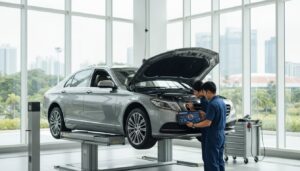
European vehicles require specialised knowledge and equipment.
A trusted European workshop provides:
- Experienced technicians
- Advanced diagnostic equipment
- Genuine or OEM-quality replacement parts
- Manufacturer-recommended servicing
- Transparent quotations
- Honest repair advice
Choosing a specialist helps ensure your vehicle receives the care it deserves.
Complete European Car Maintenance Checklist
✔ Check engine oil regularly
✔ Replace engine oil every 10,000–15,000 km
✔ Replace oil filter every service
✔ Inspect brakes regularly
✔ Check tyre pressure monthly
✔ Rotate tyres every 10,000 km
✔ Perform wheel alignment when required
✔ Replace engine air filter
✔ Replace cabin air filter
✔ Inspect suspension
✔ Check steering components
✔ Inspect cooling system
✔ Replace brake fluid as recommended
✔ Service the transmission
✔ Replace worn spark plugs
✔ Perform computer diagnostics
✔ Check battery health
✔ Inspect belts and hoses
✔ Service the air-conditioning system
✔ Repair oil leaks immediately
✔ Never ignore dashboard warning lights
Frequently Asked Questions
How often should I service my European car?
Most European vehicles should be serviced every 10,000–15,000 kilometres or once every 12 months, whichever comes first.
Is preventive maintenance really necessary?
Yes. Routine maintenance identifies small problems before they become expensive repairs and helps maintain your vehicle’s reliability and resale value.
Why do European cars require specialised servicing?
European vehicles use advanced engines, electronic systems, and manufacturer-specific technology that require specialised diagnostic equipment and experienced technicians.
Can regular servicing improve fuel economy?
Absolutely. Clean filters, fresh engine oil, properly functioning spark plugs, and accurate engine tuning all contribute to better fuel efficiency.
How can I extend the life of my European car?
Follow the manufacturer’s service schedule, use quality parts and fluids, repair problems early, and have your vehicle serviced by an experienced European car specialist.
Keep Your European Car Performing at Its Best
Your European vehicle is a valuable investment that deserves expert care. By following a regular maintenance schedule and addressing minor issues before they become major repairs, you can enjoy better performance, improved reliability, lower repair costs, and a longer vehicle lifespan.
At Volt Autocare, we specialise in servicing BMW, Mercedes-Benz, Audi, Volkswagen, MINI, Porsche, Volvo, Land Rover, and other European vehicles. Our experienced technicians use advanced diagnostic equipment and genuine or OEM-quality parts to keep your vehicle running at its best.
Book your European car service with Volt Autocare today and experience professional maintenance you can trust.