Your Mercedes-Benz is designed to deliver a smooth, controlled and confident driving experience. But even the best braking system needs regular inspection and maintenance.
If your Mercedes starts squeaking when braking, vibrating through the steering wheel, taking longer to stop, or displaying a brake warning light, these signs should not be ignored.
Brake problems can develop gradually, and some issues may not be obvious until braking performance is affected.
This guide explains the most common Mercedes-Benz brake problems, what different symptoms can mean, when you should stop driving, and what a professional brake inspection involves in Singapore.
Quick Answer: What Are the Most Common Mercedes Brake Problems?
Common Mercedes-Benz brake problems include:
- Worn brake pads
- Worn or warped brake discs
- Brake squeaking or grinding
- Brake pedal vibration
- Soft or spongy brake pedal
- Brake warning lights
- Uneven braking
- Brake fluid problems
- Sticking brake calipers
- Electronic brake system faults
- Premature or uneven brake wear
If your Mercedes is showing a red brake warning light, grinding noise, significant loss of braking performance, or a very soft brake pedal, have the vehicle inspected as soon as possible.
1. Mercedes Brake Pads Are Worn
Brake pads are one of the most frequently replaced brake components.
Every time you press the brake pedal, the pads create friction against the brake discs to slow the vehicle. Over time, the friction material becomes thinner.
Common signs of worn Mercedes brake pads include:
- Squeaking when braking
- Grinding noise
- Longer stopping distance
- Brake warning message
- Reduced braking performance
- Visible pad wear
- Brake dust around the wheels
Some Mercedes models use electronic brake pad wear sensors that can trigger a warning when the pads reach a specified wear level.
What should you do?
Don’t wait until the brake pads are completely worn.
A professional inspection can determine whether the pads need replacement and whether the brake discs have also been affected.
2. Mercedes Brake Discs Are Worn or Damaged
Brake discs, also called rotors, work together with the brake pads to slow your vehicle.
Over time, discs can become worn, scored or develop uneven surfaces.
Possible symptoms include:
- Steering wheel vibration during braking
- Brake pedal pulsation
- Shaking when braking from higher speeds
- Uneven braking
- Grooves or scoring on the discs
- Unusual brake noise
A brake disc does not automatically need replacement every time brake pads are replaced.
Its condition, thickness and surface should be inspected to determine whether it can continue to be used safely.
3. Mercedes Brakes Are Squeaking
A squeaking brake does not always mean there is a serious problem.
Brake noise can occur because of:
- Brake pad material
- Dust or debris
- Moisture
- Brake disc condition
- Brake pad wear
- Caliper-related issues
- Brake component movement
However, persistent or increasingly loud brake noise should be inspected rather than ignored.
Squeaking vs grinding
There is an important difference between the two.
Squeaking:
May be related to brake pad material, surface conditions or wear.
Grinding:
Can indicate that brake components are severely worn or that metal components are contacting each other.
If your Mercedes is producing a harsh grinding sound while braking, arrange an inspection promptly.
4. Your Mercedes Vibrates When Braking
Does your Mercedes feel smooth while driving but begin to shake when you press the brake pedal?
This can indicate a problem involving the braking system.
Possible causes include:
- Uneven brake disc surfaces
- Brake disc runout
- Uneven pad deposits
- Caliper problems
- Suspension or steering components
- Wheel or tyre issues
Why is diagnosis important?
Brake vibration isn’t always caused by the brake discs alone.
A proper inspection can help determine whether the vibration originates from the braking system, suspension, steering or wheels.
5. The Brake Pedal Feels Soft or Spongy
A brake pedal should provide a predictable and controlled response.
If the pedal suddenly feels:
- Soft
- Spongy
- Lower than normal
- Excessively easy to press
- Different from its usual feel
the braking system should be inspected.
Possible causes may include:
- Air in the brake system
- Brake fluid problems
- Hydraulic system issues
- Brake component wear
- Brake system leaks
A significant change in brake pedal feel should not be ignored.
6. Your Mercedes Takes Longer to Stop
One of the most important brake warning signs is a noticeable change in stopping performance.
You may notice that your Mercedes:
“Doesn’t stop as quickly as it used to.”
Possible causes include:
- Worn brake pads
- Worn brake discs
- Brake fluid issues
- Caliper problems
- Tyre-related issues
- Brake system faults
If braking performance has noticeably changed, have the system inspected instead of continuing to drive normally and hoping the problem disappears.
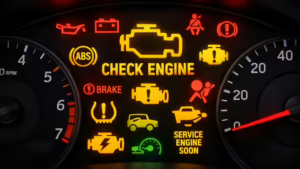
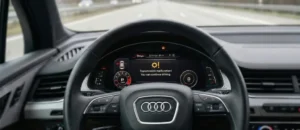
7. Mercedes Brake Warning Light Is On
Modern Mercedes-Benz vehicles use electronic systems to monitor different vehicle functions, including parts of the braking system.
A brake-related warning may indicate an issue requiring attention.
Depending on the model and warning, it could relate to:
- Brake pad wear
- Brake fluid
- Parking brake
- ABS
- Electronic braking systems
- Other brake-related faults
Red vs yellow warning lights
As a general rule, a red brake warning deserves immediate attention, particularly if it appears together with reduced braking performance.
A yellow warning may indicate that the vehicle has detected a fault or maintenance issue that should be investigated.
Because Mercedes warning messages vary between models, the exact message should be checked rather than relying only on the colour of the warning.
8. Mercedes Brake Caliper Problems
Brake calipers apply pressure to the brake pads.
If a caliper becomes stuck or doesn’t operate correctly, braking can become uneven.
Possible symptoms include:
- Vehicle pulling to one side
- Uneven brake pad wear
- One wheel becoming unusually hot
- Burning smell
- Brake noise
- Reduced braking performance
A sticking caliper can also cause accelerated wear of brake components.
This is one reason why simply replacing brake pads without checking the rest of the braking system may not solve the underlying problem.
9. Brake Fluid Problems
Brake fluid plays an important role in transferring hydraulic pressure through the braking system.
Over time, brake fluid can absorb moisture and its condition can deteriorate.
Possible warning signs of a brake fluid-related problem include:
- Soft brake pedal
- Reduced braking response
- Brake warning message
- Visible fluid leakage
- Changes in pedal feel
The correct brake fluid specification and service procedure depend on the Mercedes-Benz model.
Always use the appropriate specification for your vehicle.
10. Uneven Brake Pad Wear
Your Mercedes may have one brake pad wearing faster than another.
Uneven wear can sometimes indicate:
- Caliper problems
- Guide pin issues
- Mechanical restriction
- Uneven disc condition
- Installation issues
- Other braking-system problems
If a brake inspection shows that one side is wearing significantly faster than the other, the cause should be investigated.
Simply replacing the worn component may not address the underlying problem.
Mercedes Brake Problems: Symptoms at a Glance
| Symptom | Possible Cause | Recommended Action |
|---|---|---|
| Squeaking | Pad material, wear, surface condition | Inspect brakes |
| Grinding | Severe wear or component contact | Inspect promptly |
| Steering vibration | Disc/runout or steering issue | Professional diagnosis |
| Soft brake pedal | Hydraulic/fluid issue | Inspect promptly |
| Longer stopping distance | Pad, disc, fluid or system issue | Brake inspection |
| Vehicle pulls while braking | Caliper, tyre or suspension issue | Inspection required |
| Brake warning light | Brake/electronic system issue | Check warning/message |
| Burning smell | Overheating or sticking component | Stop and inspect |
| Uneven pad wear | Caliper or mechanical issue | Inspect brake system |
| Brake pedal pulsation | Disc/pad or other mechanical issue | Diagnosis required |
Mercedes Brake Problems in Singapore: Why They Shouldn’t Be Ignored
Driving conditions in Singapore can involve frequent:
- Stop-and-go traffic
- Traffic lights
- Short trips
- Frequent braking
- Congested roads
- Hot and humid conditions
This means your braking system can experience repeated use during everyday driving.
If you notice a change in brake performance, don’t wait until the next scheduled service to mention it.
A relatively small brake issue can sometimes become a larger repair if the underlying problem is left unresolved.
When Should You Stop Driving Your Mercedes?
Not every brake noise means you need to immediately stop the vehicle.
However, certain symptoms deserve urgent attention.
Avoid continuing to drive if you experience:
- Major loss of braking power
- A very soft or sinking brake pedal
- Severe grinding
- A strong burning smell from the brakes
- Significant brake fluid leakage
- A red brake warning accompanied by braking problems
- Severe pulling while braking
- Brake failure symptoms
If braking performance is significantly compromised, arrange appropriate assistance rather than taking unnecessary risks.
What Happens During a Mercedes Brake Inspection?
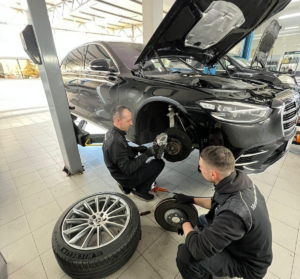
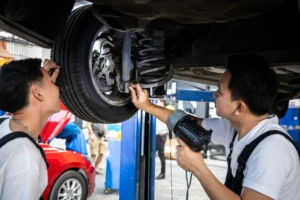
A professional brake inspection should look beyond simply checking whether the brake pads are worn.
Depending on the symptoms and vehicle model, inspection may include:
1. Brake pad inspection
Checking remaining friction material and looking for uneven wear.
2. Brake disc inspection
Checking disc condition, surface wear and other visible issues.
3. Caliper inspection
Checking whether the calipers and related components are operating correctly.
4. Brake fluid inspection
Checking fluid condition and looking for signs of leakage or contamination.
5. Brake system diagnosis
Electronic diagnostics may be appropriate if the vehicle displays a brake, ABS or related warning.
6. Road-test assessment
Where appropriate and safe, driving symptoms can help identify how the vehicle behaves during braking.
The goal is to identify why the brake problem is happening, not simply replace whichever component appears worn.
Should You Replace Mercedes Brake Pads and Discs Together?
Not necessarily.
Whether both should be replaced depends on:
- Brake pad thickness
- Disc thickness
- Disc surface condition
- Wear pattern
- Vehicle model
- Manufacturer specifications
- Overall brake condition
For example, if the brake pads are worn but the discs remain within acceptable condition, replacing the pads may be sufficient.
If the discs are also significantly worn or damaged, both components may need attention.
A proper inspection should determine what is actually required.
How Much Does Mercedes Brake Repair Cost in Singapore?
There isn’t one fixed price for Mercedes brake repair because the cost depends on the specific vehicle and problem.
Factors can include:
- Mercedes model and year
- Brake pad type
- Brake disc condition
- Number of components requiring replacement
- Genuine or aftermarket parts
- Caliper condition
- Brake fluid requirements
- Labour
- Diagnostic requirements
The best approach is to diagnose the problem first and quote based on the actual repair required.
This helps avoid replacing parts unnecessarily.
Why Choose a European Car Specialist for Mercedes Brake Problems?
Mercedes-Benz braking systems can include both mechanical and electronic components.
A specialist familiar with European vehicles can help identify problems based on:
- Vehicle symptoms
- Brake component condition
- Warning messages
- Diagnostic information
- Model-specific requirements
For Mercedes owners in Singapore, proper diagnosis can help distinguish between a straightforward brake pad replacement and a more complex issue involving the caliper, hydraulic system, ABS or electronic systems.
How to Prevent Mercedes Brake Problems
Regular inspection is one of the simplest ways to catch brake problems before they become more serious.
Good brake maintenance habits include:
1. Pay attention to new noises
Don’t ignore persistent squeaking or grinding.
2. Don’t ignore warning messages
Check brake-related warnings as soon as practical.
3. Monitor changes in pedal feel
A soft or unusual brake pedal deserves attention.
4. Check brake components during servicing
Brake inspection can identify wear before symptoms become severe.
5. Use the correct parts and specifications
Mercedes models can have different brake system requirements.
6. Address uneven wear
Find the cause rather than only replacing the visibly worn component.
Frequently Asked Questions About Mercedes Brake Problems
How do I know if my Mercedes brake pads need replacing?
Common signs include squeaking, grinding, reduced braking performance, brake warning messages and visible pad wear. The exact replacement point depends on the vehicle and brake system, so an inspection is recommended.
Why are my Mercedes brakes squeaking?
Brake squeaking can be caused by brake pad material, moisture, dust, wear, disc condition or other brake component issues. Persistent noise should be inspected.
Why does my Mercedes shake when braking?
Brake vibration can be related to brake disc condition, pad deposits, calipers or other steering, suspension, wheel or tyre issues. Diagnosis is needed to identify the actual cause.
Why is my Mercedes brake pedal soft?
A soft or spongy pedal can be associated with brake fluid or hydraulic system problems, air in the system or other brake component issues. A significant change in pedal feel should be checked promptly.
Can I drive my Mercedes with the brake warning light on?
It depends on the specific warning and how the vehicle is behaving. If the warning is accompanied by reduced braking performance, a very soft pedal, fluid leakage or other serious symptoms, the vehicle should not be driven unnecessarily.
How often should Mercedes brakes be checked?
Brake condition should be checked as part of routine vehicle servicing and whenever you notice a change in braking performance, noise, pedal feel or warning messages.
Do Mercedes brake pads have wear sensors?
Many Mercedes-Benz models use brake pad wear monitoring, but the exact system varies by model and year. A professional inspection can confirm the condition of the pads and wear sensor.
Is brake squeaking always a serious problem?
No. Some brake noises can occur without a major fault. However, persistent, worsening or grinding noises should be investigated.
Mercedes Brake Problems? Get Your Car Checked
Brakes are not a component to guess about.
If your Mercedes-Benz is squeaking, vibrating, pulling, showing a brake warning light, or taking longer to stop, the safest approach is to identify the cause before the problem develops further.
At ContiExpert, Mercedes owners in Singapore can get their vehicle’s braking concerns assessed and discuss the appropriate repair or maintenance requirements.
🚗 Notice Something Wrong With Your Mercedes Brakes?
Don’t ignore the warning signs.
Contact ContiExpert through WhatsApp to discuss your Mercedes brake problem and arrange the next step.
WhatsApp CTA:
“Hi ContiExpert, I have a Mercedes-Benz with a brake problem. I’d like to have it checked.”