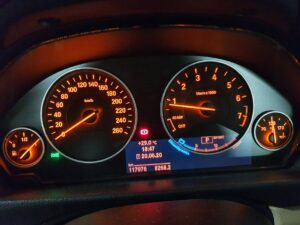
Few things are more concerning for a BMW owner than seeing the engine temperature warning appear on the dashboard.
You may notice the temperature rising, a warning message appearing, steam coming from the engine bay, or your BMW suddenly losing power.
An overheating engine is not something to simply monitor and hope will disappear.
Your BMW’s cooling system is designed to keep the engine within its normal operating temperature. When something goes wrong—such as a coolant leak, water pump failure, thermostat problem or radiator issue—the engine can become excessively hot.
The sooner the cause is identified, the better the chance of preventing further engine damage.
If your BMW is overheating in Singapore, this guide explains the common causes, warning signs, what you should do immediately and when professional diagnostics are needed.
⚡ Quick Answer: Why Is My BMW Overheating?
A BMW can overheat when its cooling system cannot remove enough heat from the engine.
Common causes include:
- Low coolant level
- Coolant leaks
- Water pump failure
- Thermostat problems
- Radiator problems
- Cooling fan failure
- Damaged coolant hoses
- Faulty coolant temperature sensor
- Air trapped in the cooling system
- Head gasket or other engine-related problems
The most important thing to remember:
If your BMW is overheating, stop driving when it is safe to do so and allow the engine to cool. Continuing to drive an overheating engine can turn a cooling-system problem into a much more expensive engine repair.
🌡️ How Do You Know Your BMW Is Overheating?
Modern BMWs can provide several warnings when the engine temperature becomes abnormal.
Look out for:
🔴 1. Temperature Warning
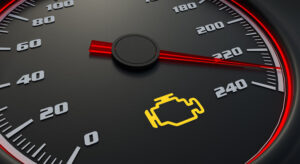
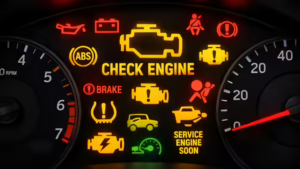
A temperature warning or overheating message on the dashboard is one of the clearest signs that something is wrong.
💨 2. Steam From the Engine Bay
Steam or vapour coming from under the bonnet can indicate coolant escaping onto hot components.
🧪 3. Coolant Warning
A low-coolant warning may indicate that the coolant level has dropped or that there is a leak somewhere in the cooling system.
🚗 4. Loss of Engine Power
An overheating BMW may reduce engine performance as a protective measure.
🔥 5. Burning or Sweet Smell
An unusual sweet smell around the engine bay can sometimes be associated with leaking coolant.
💧 6. Coolant Under the Car
A puddle or visible fluid around the vehicle may indicate a cooling-system leak.
⚠️ 7. Unusual Engine Behaviour
Rough running, unusual noises or other changes in engine behaviour alongside an overheating warning should be taken seriously.
🔧 10 Common Causes of BMW Engine Overheating
1. Low Coolant Level
Coolant plays a critical role in transferring heat away from the engine.
If the coolant level becomes too low, the cooling system may not be able to maintain the correct engine temperature.
Low coolant can happen because of:
- A leak
- Incorrect coolant level
- A damaged hose
- Radiator problems
- Expansion tank problems
- Other cooling-system faults
Important: Simply adding coolant may temporarily restore the level without fixing the underlying problem.
If the coolant keeps disappearing, the system should be inspected for a leak.
💧 2. Coolant Leak
A coolant leak is one of the common reasons an engine can overheat.
Potential leak points include:
- Coolant hoses
- Radiator
- Expansion tank
- Water pump
- Thermostat housing
- Seals and connections
A leak may be external and visible, but some cooling-system problems may not be immediately obvious.
Common signs of a BMW coolant leak:
- Low coolant warning
- Coolant smell
- Visible coolant
- Steam
- Temperature warning
- Repeated need to top up coolant
If you repeatedly need to add coolant to your BMW, find the reason for the coolant loss instead of treating the symptom.
⚙️ 3. BMW Water Pump Failure
The water pump circulates coolant through the engine and cooling system.
If the water pump does not operate correctly, coolant circulation can be reduced or interrupted.
This can result in:
- Rising engine temperature
- Overheating
- Coolant circulation problems
- Warning messages
- Reduced engine performance
Water pump problems can require prompt attention, especially if the vehicle is already overheating.
🌡️ 4. Faulty Thermostat
The thermostat helps regulate coolant flow according to engine temperature.
If the thermostat becomes stuck or fails to operate correctly, coolant may not flow through the cooling system as intended.
Possible symptoms include:
- Engine overheating
- Temperature fluctuations
- Slow warm-up
- Temperature warnings
- Cooling system irregularities
A diagnostic check and physical inspection can help determine whether the thermostat is involved.
🧊 5. Radiator Problems
The radiator helps transfer heat from the coolant to the surrounding air.
A radiator problem can reduce the cooling system’s ability to remove heat.
Potential issues include:
- Leaks
- Internal blockage
- External blockage
- Damaged components
- Reduced cooling efficiency
A radiator issue can become particularly noticeable when the engine is under higher load.
🌀 6. Cooling Fan Failure
The cooling fan helps move air through the radiator when additional airflow is required.
If the fan or its control system fails, the engine may struggle to maintain the correct temperature.
You may notice:
- Temperature rising while stationary
- Overheating in traffic
- Cooling fan not operating when expected
- Temperature warnings
This can be particularly relevant in Singapore’s warm climate and heavy stop-start traffic, where the cooling system can be working hard even when the vehicle is not travelling at high speed.
🔌 7. Coolant Temperature Sensor Problem
BMW’s electronic systems monitor engine temperature using sensors.
A faulty temperature sensor or related wiring problem can produce incorrect temperature information or trigger warning messages.
However, a sensor fault should not automatically be assumed just because a temperature-related warning appears.
Proper diagnostics should determine whether the engine is genuinely overheating or whether the monitoring system itself has a problem.
🧯 8. Air in the Cooling System
Air trapped inside the cooling system can interfere with coolant circulation.
This can happen after cooling-system work if the system has not been properly filled or bled.
Possible symptoms include:
- Temperature fluctuations
- Poor coolant circulation
- Heater performance changes
- Overheating
- Coolant warnings
The appropriate procedure depends on the BMW model and cooling-system configuration.
🛢️ 9. Cooling System Component Failure
BMW cooling systems contain multiple components that work together.
A problem with one component can affect the entire system.
Depending on the model, potential problem areas can include:
- Expansion tank
- Hoses
- Seals
- Water pump
- Thermostat
- Radiator
- Fan
- Sensors
- Cooling-system connections
This is why replacing one part without diagnosing the actual fault may not solve the overheating problem.
🔥 10. Serious Engine Problems
In some cases, repeated or severe overheating can be associated with internal engine problems.
Potential signs that require professional inspection include:
- Persistent overheating
- Significant coolant loss
- White exhaust smoke
- Milky engine oil
- Persistent bubbling in the cooling system
- Poor engine performance
- Repeated overheating after cooling-system repairs
These symptoms can have multiple possible causes, so a proper diagnosis is essential before assuming a major engine failure.
🚦 BMW Overheating in Singapore Traffic: Why It Can Happen
Singapore driving often involves:
- Stop-start traffic
- Frequent idling
- Short-distance journeys
- Heavy air-conditioning use
- Warm ambient temperatures
Your BMW’s cooling system needs to manage engine heat even when the vehicle is moving slowly or sitting in traffic.
If a cooling-system component is already weak, these conditions may make the problem more noticeable.
If your BMW overheats mainly in traffic but seems normal at higher speeds:
The cooling fan, airflow through the radiator, coolant circulation and other cooling-system components may need to be inspected.
🛑 What Should You Do If Your BMW Starts Overheating?
If your BMW displays an overheating warning, take the situation seriously.
Step 1 — Reduce Engine Load
If you are driving, safely reduce speed and avoid unnecessary acceleration.
Step 2 — Find a Safe Place to Stop
Pull over somewhere safe as soon as practical.
Step 3 — Switch Off the Engine
If the vehicle is overheating, shutting the engine down can help prevent further heat buildup.
Step 4 — Allow the Engine to Cool
Do not immediately open the coolant reservoir or radiator components while the engine is hot.
The cooling system can be pressurised, and hot coolant can cause serious burns.
Step 5 — Don’t Keep Driving Just Because the Warning Disappeared
An engine that cools down may still have an unresolved problem.
The underlying cause should be identified before normal driving continues.
❌ What NOT to Do When Your BMW Overheats
Don’t continue driving for a long distance.
A small cooling-system problem can become a major engine problem if overheating continues.
Don’t open a hot coolant reservoir.
The cooling system can be pressurised.
Don’t repeatedly top up coolant without checking for a leak.
If coolant keeps disappearing, there may be an underlying problem.
Don’t assume the temperature warning is “just a sensor.”
The engine should be checked to determine whether the temperature is genuinely abnormal.
Don’t ignore repeated overheating.
If the problem keeps returning, the cooling system needs proper diagnosis.
🔍 How BMW Overheating Is Diagnosed
Finding the cause requires more than simply adding coolant.
A professional diagnostic process may include:
1. Diagnostic Scan
BMW-compatible diagnostic equipment can help identify stored or active fault codes.
2. Cooling System Inspection
The cooling system can be checked for visible leaks and damaged components.
3. Coolant Level Check
The coolant level and condition can be inspected.
4. Leak Testing
Where appropriate, pressure testing can help identify leaks that are not immediately visible.
5. Water Pump & Thermostat Assessment
The cooling system’s circulation and temperature regulation can be assessed.
6. Cooling Fan Check
The fan and its control system can be inspected if overheating occurs particularly at low speeds or while stationary.
7. Further Engine Testing
If the symptoms suggest a more serious internal engine issue, additional testing may be required.
📊 BMW Overheating Symptoms & Possible Causes
| Symptom | Possible Areas to Check |
|---|---|
| Low coolant warning | Coolant level, leak, expansion system |
| Coolant under vehicle | Hose, radiator, water pump or connection |
| Overheating in traffic | Cooling fan, airflow, coolant circulation |
| Repeated overheating | Cooling system or engine-related fault |
| Steam from engine bay | Possible coolant leak |
| Temperature fluctuations | Thermostat, coolant circulation, sensor |
| Loss of power + overheating | Engine protection or underlying fault |
| Coolant smell | Possible coolant leak |
| Overheating after cooling-system work | Air in system or unresolved fault |
These are possible causes, not a diagnosis.
💰 How Much Does BMW Overheating Repair Cost in Singapore?
The cost depends heavily on what is actually causing the overheating.
For example, the repair requirements can be very different for:
- A coolant leak
- A damaged hose
- A thermostat issue
- A water pump problem
- A radiator problem
- A cooling fan fault
- A sensor issue
- A more serious engine problem
The BMW model, engine, parts required, labour and diagnostic work can all affect the final cost.
The best first step is diagnosis.
Rather than replacing parts based on symptoms alone, identify the cause first and then determine the appropriate repair.
🚘 Can I Drive My BMW After It Overheats?
It depends on the severity and the underlying problem.
If the BMW has experienced a genuine overheating event, don’t assume it is safe simply because the temperature has returned to normal.
If the vehicle has:
- Overheated significantly
- Lost coolant
- Produced steam
- Displayed a serious temperature warning
- Repeatedly overheated
- Developed unusual engine symptoms
it should be inspected before returning to normal driving.
❓ BMW Engine Overheating FAQs
Why is my BMW overheating?
Common causes include low coolant, coolant leaks, water pump problems, thermostat faults, radiator issues, cooling fan failure and other cooling-system or engine problems.
What should I do if my BMW temperature warning comes on?
Safely reduce engine load, pull over when possible, switch off the engine and allow it to cool. Do not open the coolant reservoir while the engine is hot.
Can low coolant cause my BMW to overheat?
Yes. Insufficient coolant can reduce the cooling system’s ability to remove heat from the engine. However, if the coolant level keeps dropping, the cause of the coolant loss should be investigated.
Why does my BMW overheat only in traffic?
Possible areas include the cooling fan, radiator airflow, coolant circulation or other cooling-system components. A proper inspection is needed to identify the cause.
Can a bad water pump cause BMW overheating?
Yes. The water pump circulates coolant through the cooling system, so a failure can contribute to overheating.
Can a thermostat cause BMW overheating?
Yes. A thermostat that does not operate correctly can interfere with coolant flow and temperature regulation.
Is BMW overheating an emergency?
Severe overheating should be treated as an urgent problem. Continuing to drive an overheating vehicle can potentially cause additional engine damage.
Can I add coolant to an overheating BMW?
Do not open the coolant reservoir while the engine is hot. Once the vehicle has cooled sufficiently, the coolant level can be checked safely according to the vehicle manufacturer’s instructions. Repeated coolant loss should be professionally investigated.
Why does my BMW overheat but have no visible coolant leak?
Not every cooling-system problem produces an obvious external leak. The system may require pressure testing, diagnostic checks or further inspection to identify the cause.
How do I prevent my BMW from overheating?
Regular maintenance, checking for coolant loss, addressing warning messages promptly and having the cooling system inspected when symptoms appear can help reduce the risk of overheating-related problems.
🛠️ BMW Overheating? Don’t Wait for the Engine to Get Worse.
An overheating warning is your BMW telling you that something needs attention.
Whether the cause is a coolant leak, water pump, thermostat, radiator, cooling fan or another fault, the first priority is to identify the actual problem.
📲 Contact ContiExpert
If your BMW is overheating in Singapore, send us a WhatsApp message with:
- BMW model
- Model year
- Engine type, if known
- Dashboard warning photo
- Temperature warning/message
- Any visible coolant leak
- Other symptoms
- When the overheating started
This information can help provide a clearer starting point for diagnosis.
ContiExpert — European Car Specialist in Singapore
Don’t ignore an overheating warning. Diagnose the cause before a cooling-system problem becomes an engine problem.