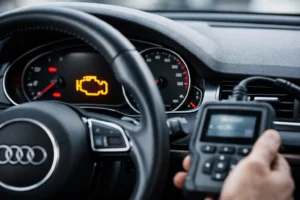
Your European car should deliver smooth, responsive performance whether you’re accelerating from a traffic light, overtaking on the expressway or climbing a slope.
So when your BMW, Mercedes-Benz, Audi, Volkswagen, Volvo or other European car suddenly loses power, it’s something worth investigating.
You may notice that the car:
- Feels slow when accelerating
- Struggles to climb hills
- Doesn’t respond normally when you press the accelerator
- Hesitates during acceleration
- Enters a reduced-power or “limp” mode
- Feels different after starting
- Loses power intermittently while driving
There isn’t one single cause of power loss.
It can be related to the engine, turbocharger, fuel system, ignition system, air intake, sensors, transmission, exhaust system or electronic control systems.
This guide explains the most common causes of European car power loss, the warning signs to watch for, when the problem may be serious and how a specialist workshop can diagnose it.
Quick Answer: Why Is My European Car Losing Power?
Common causes of European car power loss include:
- Turbocharger problems
- Blocked air filter
- Faulty airflow or pressure sensors
- Fuel delivery problems
- Worn spark plugs or ignition coils
- Clogged fuel injectors
- Exhaust or catalytic-converter restrictions
- Throttle body problems
- Engine overheating
- ECU or electronic faults
- Vacuum or boost leaks
- Transmission-related problems
The exact cause depends on the vehicle’s make, model, engine, symptoms and diagnostic results.
A car that suddenly loses power shouldn’t be diagnosed by replacing parts at random. Proper testing is needed to identify the actual cause.
What Does “Loss of Power” Mean?
Engine power loss means your vehicle isn’t producing or delivering the performance you normally expect.
For example, you may press the accelerator and notice:
“The engine is running, but the car isn’t accelerating normally.”
Some drivers describe the feeling as:
- Sluggish acceleration
- Weak response
- Hesitation
- Lack of turbo boost
- Reduced engine performance
- Struggling uphill
- Delayed acceleration
Power loss can be gradual or sudden.
Gradual power loss may develop over weeks or months, while sudden power loss can occur because the vehicle has detected a fault and reduced engine output to protect the engine or drivetrain.
12 Common Causes of European Car Power Loss
1. Turbocharger Problems
Many modern European vehicles use turbocharged engines.
The turbocharger forces additional air into the engine to help produce more power.
If the turbocharging system develops a problem, the vehicle may feel noticeably weaker.
Possible causes include:
- Boost leaks
- Damaged turbo components
- Faulty boost-control components
- Wastegate problems
- Turbocharger actuator faults
- Oil-related turbo problems
Common symptoms
You may notice:
- Weak acceleration
- Little or no boost
- Whistling noises
- Reduced fuel efficiency
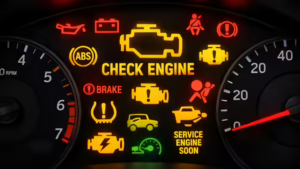
- Check Engine Light
- Sudden loss of power
If your turbocharged European car suddenly feels naturally aspirated, the boost system deserves attention.
2. Air Filter Is Dirty or Blocked
Your engine needs the correct amount of clean air to produce power.
A heavily restricted air filter can reduce airflow into the engine.
This may result in:
- Sluggish acceleration
- Reduced engine performance
- Poor fuel economy
- Engine hesitation
Air filters are relatively simple components, but they shouldn’t be overlooked during diagnosis.
Regular servicing can help prevent excessive restriction.
3. Faulty Airflow or Pressure Sensors
Modern European engines rely on sensors to measure and control engine conditions.
Depending on the vehicle, these may include:
- Mass Air Flow (MAF) sensor
- Manifold Absolute Pressure (MAP) sensor
- Boost pressure sensor
- Intake air temperature sensor
- Oxygen sensors
If a sensor provides incorrect information, the engine control system may adjust fuel, ignition or boost incorrectly.
This can result in:
- Poor acceleration
- Rough running
- Reduced power
- Increased fuel consumption
- Warning lights
A diagnostic scan and appropriate sensor testing can help identify the problem.
4. Fuel Delivery Problems
The engine needs adequate fuel delivery to produce power.
A problem anywhere in the fuel system can affect performance.
Possible causes include:
- Weak fuel pump
- Restricted fuel filter
- Fuel pressure problems
- Faulty fuel pressure regulator
- Fuel injector issues
- Fuel-system electrical faults
Symptoms can include:
- Hesitation
- Poor acceleration
- Engine misfires
- Difficulty starting
- Stalling
- Loss of power under load
If power loss becomes worse when accelerating hard or climbing a hill, fuel delivery should be considered as part of the diagnosis.
5. Worn Spark Plugs or Ignition Coils
Petrol engines require a strong and correctly timed spark to ignite the air-fuel mixture.
Worn spark plugs or failing ignition coils can cause misfires.
A misfiring engine may feel like it has suddenly lost power.
You might experience:
- Rough acceleration
- Engine shaking
- Hesitation
- Reduced performance
- Check Engine Light
- Increased fuel consumption
If the Check Engine Light is flashing and the engine is running very poorly, avoid unnecessary driving and have the vehicle inspected promptly.
6. Clogged or Faulty Fuel Injectors
Fuel injectors deliver fuel into the engine at precisely controlled times.
If an injector becomes clogged, contaminated or develops an electrical fault, fuel delivery may become uneven.
This can cause:
- Poor acceleration
- Rough idle
- Misfires
- Reduced power
- Increased fuel consumption
Injector problems can be difficult to confirm without proper testing.
Simply replacing injectors without diagnosis can be expensive and unnecessary.
7. Exhaust Restriction
Your engine needs to expel exhaust gases efficiently.
A restriction in the exhaust system can affect engine performance.
Possible causes include:
- Catalytic-converter restriction
- Exhaust component damage
- Other exhaust-flow problems
Possible symptoms include:
- Weak acceleration
- Engine struggling at higher RPM
- Reduced fuel economy
- Excessive heat
- Check Engine Light
A technician can perform appropriate tests to determine whether exhaust restriction is contributing to the power loss.
8. Throttle Body Problems
The throttle body controls the amount of air entering the engine on many modern vehicles.
A dirty, sticking or electronically faulty throttle body can cause:
- Poor accelerator response
- Hesitation
- Rough idle
- Reduced power
- Warning lights
In some vehicles, throttle-related faults can cause the engine control system to limit performance.
9. Vacuum or Boost Leaks
Air leaks can cause major performance problems in modern European engines.
Depending on the engine design, leaks may occur in:
- Intake hoses
- Vacuum lines
- Intercooler piping
- Turbocharger plumbing
- Intake connections
A boost leak can be particularly noticeable on a turbocharged engine.
The car may still drive normally at light throttle but feel extremely weak when you try to accelerate harder.
10. Engine Overheating
If engine temperature becomes too high, the vehicle may reduce engine performance to protect itself.
Possible causes include:
- Cooling-system problems
- Low coolant
- Thermostat issues
- Cooling fan problems
- Water pump faults
- Radiator problems
Power loss accompanied by an overheating warning should be treated seriously.
Do not continue driving an overheating vehicle unnecessarily.
11. ECU or Electronic Faults
Modern European vehicles rely heavily on electronic control units.
The Engine Control Unit (ECU) manages numerous engine functions, including:
- Fuel delivery
- Ignition
- Air-fuel mixture
- Turbocharger control
- Throttle operation
- Emissions systems
A sensor, wiring, actuator or ECU-related fault can cause the vehicle to enter a protective reduced-power mode.
This may be referred to as:
Limp mode / Reduced power mode
The vehicle may deliberately limit engine performance to help prevent further damage.
12. Transmission Problems
Not every “loss of power” problem originates from the engine.
A transmission fault can create the sensation that the engine isn’t producing enough power.
You may notice:
- Delayed acceleration
- Gear slipping
- Harsh gear changes
- High engine RPM without corresponding acceleration
- Difficulty selecting gears
- Transmission warning messages
If the engine revs increase but the vehicle doesn’t accelerate proportionally, the transmission or drivetrain should also be investigated.
European Car Losing Power: Symptoms That Can Help Identify the Cause
The exact symptoms can provide useful clues.
| Symptom | Possible Causes |
|---|---|
| Weak acceleration | Turbo, fuel, air or ignition problem |
| Sudden power loss | Electronic fault, turbo, fuel or engine protection mode |
| Power loss under acceleration | Boost leak, fuel delivery or ignition |
| Power loss uphill | Turbo, fuel, exhaust or engine issue |
| Engine shaking + power loss | Misfire, spark plug or ignition coil |
| High RPM but slow acceleration | Transmission/drivetrain issue |
| Power loss + Check Engine Light | Sensor, ignition, fuel, turbo or emissions fault |
| Power loss + overheating | Cooling-system or engine problem |
| Power loss + black smoke | Air/fuel or turbo-related issue |
| Power loss + unusual turbo noise | Turbo or boost-system problem |
Why Does My European Car Lose Power When Accelerating?
If your car drives normally at low speeds but loses power when you accelerate, the problem may become apparent only when the engine is under greater load.
Potential causes include:
- Turbocharger or boost problems
- Fuel pressure problems
- Weak fuel pump
- Ignition misfires
- Restricted exhaust
- Intake leaks
- Sensor problems
- Throttle-related faults
A professional diagnostic assessment can reproduce the symptom and check the relevant systems under appropriate conditions.
Why Does My European Car Lose Power Uphill?
Driving uphill requires more engine power.
A problem that isn’t obvious during gentle driving can become noticeable when the engine is under load.
Possible causes include:
- Weak turbo boost
- Fuel delivery problems
- Ignition misfires
- Restricted exhaust
- Airflow problems
- Transmission issues
If your vehicle consistently struggles on inclines, don’t simply assume that the engine is “getting old.”
A diagnostic inspection can identify whether there is an underlying mechanical or electronic problem.
Why Does My Car Go Into Limp Mode?
If your European car suddenly feels much slower and won’t accelerate normally, it may have entered a protective reduced-power mode.
The vehicle may do this when its control system detects a potentially serious fault.
Possible triggers include:
- Turbocharger problems
- Sensor faults
- Engine misfires
- Boost pressure problems
- Throttle faults
- Transmission faults
- Overheating
- Other electronic or mechanical issues
Turning the engine off may temporarily remove the symptom in some cases, but that doesn’t mean the underlying problem has been fixed.
A diagnostic scan should be performed to identify the stored fault codes and determine the cause.
Can a Check Engine Light Cause Loss of Power?
The Check Engine Light itself doesn’t cause the power loss.
Instead, the warning indicates that the vehicle’s engine-management system has detected a condition that may affect emissions, performance or engine operation.
Some faults can cause the vehicle to reduce power.
Examples include:
- Misfires
- Boost faults
- Sensor problems
- Fuel-system faults
- Throttle problems
- Emissions-related faults
If the Check Engine Light appears together with noticeable power loss, professional diagnostics are recommended.
Is It Safe to Drive a European Car That Is Losing Power?
It depends on the symptoms and severity.
Arrange an inspection soon if:
- Acceleration has gradually become weaker
- The engine feels slightly sluggish
- The Check Engine Light remains on
- The car occasionally hesitates
Stop driving and seek professional assistance if:
- Power suddenly drops significantly
- The engine is overheating
- The Check Engine Light is flashing
- The engine is shaking severely
- There is smoke
- You hear serious mechanical noises
- The vehicle enters severe reduced-power mode
- You notice a major fluid leak
Loss of power can affect your ability to accelerate safely, particularly when merging or overtaking.
How Do European Car Specialists Diagnose Power Loss?
Power loss can have many possible causes, so proper diagnosis is more effective than guessing.
A professional inspection may include:
1. Diagnostic Scan
The vehicle’s electronic control modules are scanned for stored or active fault codes.
2. Visual Inspection
Technicians inspect:
- Hoses
- Wiring
- Intake components
- Turbo plumbing
- Fluid levels
- Visible leaks
3. Air Intake Testing
The intake system can be checked for restrictions or leaks.
4. Turbo and Boost Testing
For turbocharged vehicles, boost pressure and related components can be assessed.
5. Fuel System Testing
Fuel pressure and delivery can be checked where appropriate.
6. Ignition System Inspection
Spark plugs, ignition coils and related components can be assessed.
7. Throttle and Sensor Testing
Relevant sensors and throttle components can be tested based on the vehicle’s symptoms.
8. Road Test
When safe and appropriate, a road test can help reproduce the power-loss condition.
The objective is to identify the root cause before recommending repairs.
Why Diagnostic Fault Codes Matter
Modern European cars can store fault codes when a system detects abnormal operation.
These codes can provide valuable information about:
- Which system detected the problem
- When the fault occurred
- Whether the fault is intermittent
- Possible affected components
However, a fault code doesn’t always mean the named component itself needs replacement.
For example, a sensor-related fault can sometimes be caused by:
- Wiring
- Vacuum leaks
- Air leaks
- Voltage problems
- Another component producing abnormal readings
That’s why fault codes should be interpreted alongside physical testing.
How Much Does European Car Power Loss Repair Cost in Singapore?
There is no single price for fixing a European car that is losing power.
The cost depends entirely on the underlying cause.
For example, the repair could involve:
- Air filter replacement
- Spark plugs
- Ignition coils
- Sensor replacement
- Intake hose repair
- Fuel-system repairs
- Turbocharger components
- Throttle body
- Exhaust components
- ECU-related diagnosis
- Transmission repairs
A proper diagnostic assessment is therefore important before quoting the repair cost.
How to Prevent Loss-of-Power Problems
Not every power-loss problem can be prevented, but regular maintenance can reduce the likelihood of major issues.
Follow the Correct Service Schedule
Regular servicing helps identify worn components before they become serious.
Replace Filters When Required
Air and fuel filters should be maintained according to the vehicle’s requirements.
Don’t Ignore Warning Lights
A Check Engine Light or other warning can be an early indication of a developing problem.
Maintain Correct Fluid Levels
Engine oil and coolant levels are particularly important.
Address Small Performance Changes
If your car gradually becomes less responsive, don’t wait until it stops accelerating properly.
Use the Correct Parts and Fluids
European vehicles can have specific requirements for oils, filters, spark plugs and other components.
European Car Power Loss: Quick Diagnostic Checklist
If your European car is losing power, ask yourself:
Is the Check Engine Light on?
If yes, diagnostic scanning should be considered.
Does the engine shake?
If yes, a misfire or ignition/fuel problem may be involved.
Does it happen only during hard acceleration?
Turbo, fuel delivery, ignition or boost issues may need investigation.
Does it happen uphill?
The problem may only become noticeable under higher engine load.
Does the engine rev but the car doesn’t accelerate?
The transmission or drivetrain may need inspection.
Is the car overheating?
Stop and address the cooling-system issue before continuing to drive.
Did the car suddenly enter reduced-power mode?
A stored electronic or mechanical fault may have triggered protective operation.
Frequently Asked Questions
Why is my European car losing power?
Common causes include turbocharger problems, fuel delivery issues, ignition faults, restricted airflow, sensor problems, exhaust restrictions, throttle faults, overheating and electronic control-system problems.
Why does my BMW suddenly lose power?
BMW power loss can be caused by several systems, including the turbocharger, ignition, fuel system, sensors, intake system or electronic control system. A diagnostic scan and physical inspection can identify the actual cause.
Why is my Mercedes losing power when accelerating?
Possible causes include boost problems, fuel delivery issues, ignition faults, airflow problems, sensors or transmission-related issues. The symptoms should be diagnosed rather than assuming one component has failed.
Why is my Audi losing power?
Audi power loss can be related to turbocharging, fuel delivery, ignition, intake leaks, sensors, throttle components, exhaust restrictions or electronic faults.
Why does my European car lose power uphill?
Uphill driving puts greater load on the engine. Problems with turbo boost, fuel delivery, ignition, exhaust flow or transmission performance may become more noticeable under load.
What does limp mode mean?
Limp mode, also called reduced-power mode on some vehicles, is a protective operating strategy that can limit vehicle performance after the control system detects certain faults.
Can a bad spark plug cause loss of power?
Yes. A worn or faulty spark plug can contribute to engine misfires, hesitation and reduced power.
Can a dirty air filter cause power loss?
A severely restricted air filter can reduce airflow and contribute to reduced engine performance, although other causes should also be considered.
Can a faulty sensor cause a car to lose power?
Yes. Incorrect sensor information can cause the engine-management system to adjust fuel, ignition, throttle or boost operation incorrectly.
How much does European car power-loss repair cost in Singapore?
There is no standard price because the repair depends on the underlying fault. A diagnostic inspection is normally required before determining the repair and cost.
Why Choose a European Car Specialist for Power Loss?
Power loss can be caused by a relatively simple maintenance issue or a more complex engine, turbo, transmission or electronic fault.
A European car specialist can provide:
- European vehicle diagnostics
- Engine fault-code scanning
- Turbo and boost-system inspection
- Fuel-system diagnosis
- Ignition-system inspection
- Sensor testing
- ECU-related diagnostics
- Intake and exhaust inspection
- Transmission assessment
- Professional repair recommendations
The goal should always be:
Diagnose first. Replace parts second.
Professional European Car Diagnostics & Repair in Singapore
If your BMW, Mercedes-Benz, Audi, Volkswagen, Volvo or another European vehicle is losing power, don’t ignore the change in performance.
A car that feels slightly sluggish today could develop into a more serious problem tomorrow.
Whether you’re experiencing weak acceleration, sudden power loss, hesitation, reduced turbo boost, limp mode or a Check Engine Light, professional diagnostics can help identify the underlying problem.
ContiExpert provides European car diagnostics, servicing and repair in Singapore, helping owners identify engine, turbo, fuel, electrical and transmission-related problems.
Losing Power? Find the Cause Before It Becomes a Bigger Problem.
Contact ContiExpert for a professional European car diagnostic inspection in Singapore.
Need Help Now?
WhatsApp ContiExpert with your car’s make, model and symptoms to discuss the problem or arrange an inspection.