That sinking feeling when a dashboard warning light illuminates is often followed by a more significant concern: how much will this repair cost, and can I trust the workshop? For many drivers, navigating the world of car repair Singapore is a journey filled with uncertainty, from deciphering complex quotes in SGD to worrying about unnecessary upsells. This is especially true for owners of precision European vehicles, where the fear of being overcharged for a subpar repair is a genuine concern.
This expert guide is designed to eliminate that ambiguity and restore your peace of mind. We provide the clarity you need to make confident decisions for your vehicle. Inside, we break down the real costs of common repairs, offer professional criteria for selecting a trustworthy workshop, and explain the critical differences between genuine, OEM, and aftermarket parts. Our goal is to equip you with the knowledge to ensure your car receives the high-quality, reliable service it requires for lasting safety and performance.
Understanding Car Repair Costs in Singapore: A Detailed Breakdown
When budgeting for car ownership in Singapore, repair costs are a significant and often unpredictable variable. The final bill is never a single number; it’s a professional calculation based on three core components: the cost of replacement parts, the labour charges for a technician’s expertise, and the prevailing Goods and Services Tax (GST). Understanding these elements is the first step to managing your vehicle’s maintenance expenses effectively.
Key Factors That Influence Your Final Bill
Several critical factors determine the final invoice for any car repair singapore service. A clear understanding of these can help you anticipate costs and make informed decisions about your vehicle’s care.
- Car Make and Model: Parts for European cars like Mercedes-Benz, BMW, or Audi are typically priced higher than those for Japanese or Korean models due to import costs, brand positioning, and engineering complexity.
- Part Type: You have options. Genuine parts come directly from the car manufacturer and command the highest price. Original Equipment Manufacturer (OEM) parts are made by the same company but are more affordable, while aftermarket parts offer a budget-friendly alternative.
- Labour Costs: Rates are influenced by the workshop’s expertise and the job’s complexity. A straightforward brake change requires less time and skill than intricate engine or gearbox work performed by a specialist technician.
- Diagnostics: Before any repair, a professional workshop will perform advanced diagnostics to pinpoint the exact issue. This service carries a fee but prevents unnecessary part replacements, saving you money in the long run.
Estimated Price Ranges for Common Repairs in Singapore
To provide a clearer picture, here are some estimated price ranges for common repairs. These figures are for reference only and can vary significantly based on your specific vehicle and workshop.
| Service / Repair | Estimated Cost (S$) |
|---|---|
| Brake Pad Replacement (Front Pair) | S$180 – S$450+ |
| Aircon Compressor Replacement | S$600 – S$1,500+ |
| Shock Absorber Replacement (Pair) | S$500 – S$1,200+ |
| Car Battery Replacement (VARTA/Bosch) | S$150 – S$400+ |
| Gearbox Repair / Overhaul | S$2,000 – S$6,000+ |
Disclaimer: These prices are estimates for 2026 and can vary based on the factors mentioned above. Always request a detailed quote from your workshop before authorising any work.
Authorised Dealer vs. Independent Workshop Pricing
Your choice of workshop plays a crucial role in the overall cost. Authorised dealers operate with higher overheads to meet brand standards, which often translates to higher labour rates and parts markups. In contrast, independent workshops provide a more competitive pricing structure. Understanding the different types of automobile repair shops is key to finding the right fit for your needs and budget. A reputable independent specialist delivers expert-level service and often has direct access to high-quality OEM parts, offering an ideal balance of quality and value without the dealership premium.
Common Car Repairs Singapore Drivers Face (and Their Symptoms)
Singapore’s unique climate—characterised by high heat, constant humidity, and frequent stop-start traffic—places specific stresses on your vehicle. Understanding the early warning signs of common issues can help you seek timely intervention from a professional workshop. This guide details frequent problems drivers encounter, empowering you to better communicate with your service specialist about your need for car repair in Singapore.
Brake System Issues: Squeaks, Grinds, and Spongy Pedals
Your vehicle’s braking system is paramount for safety, and Singapore’s demanding city driving conditions can accelerate wear. Listen and feel for these critical signs:
- High-pitched squeal: This is often the first indicator that your brake pads are nearing the end of their service life. The sound comes from a built-in metal wear indicator designed to alert you.
- Grinding noise: A harsh, metallic grinding sound means the brake pads have worn down completely. This metal-on-metal contact can damage brake rotors and requires immediate attention to ensure safety.
- Spongy or soft brake pedal: If your brake pedal feels less responsive or sinks towards the floor, it could signal air in the brake lines or a fluid leak, which severely compromises stopping power.
Air-Conditioning Problems: From Weak Airflow to No Cold Air
In Singapore’s tropical heat, a faulty air-conditioner is a primary concern for drivers. These symptoms point to a system in need of professional service:
- Air is not cold: This common problem usually points to low refrigerant gas due to a leak or a failing A/C compressor, the heart of the cooling system.
- Foul smell from vents: A musty odour often indicates mould or bacteria buildup on the evaporator coil, a frequent issue exacerbated by our humid environment.
- Weak airflow: If the fan is on high but little air is coming out, the culprit is likely a clogged cabin air filter or a malfunctioning blower motor.
Engine & Suspension Faults: Warning Lights and Bumpy Rides
The engine and suspension are core to your car’s performance and reliability. Addressing these symptoms promptly is key to avoiding more complex and costly problems.
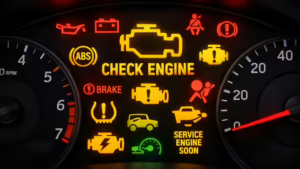
- Check Engine Light is on: This dashboard warning can signify anything from a loose fuel cap to a serious engine misfire. An advanced diagnostic scan is essential to retrieve the fault code and identify the root cause, ensuring the correct repair is performed and protecting your consumer rights under Singapore’s Lemon Law.
- Bumpy or unstable ride: If your car bounces excessively over bumps or feels less controlled around corners, your shock absorbers or struts are likely worn and require replacement.
- Oil leak stains: Noticing dark patches on the pavement where you park is a clear sign of a leak. This is typically caused by deteriorating gaskets or seals that have hardened due to constant engine heat.
How to Choose the Right Car Workshop in Singapore
Selecting the right workshop is crucial for ensuring your vehicle’s performance and longevity. The process of finding a provider for dependable car repair in Singapore can be challenging, but understanding your options is the first step. Drivers generally choose between two main types of workshops: generalists and brand specialists. Your decision depends on your car’s make, the complexity of the issue, and your budget.
The Generalist Workshop: Good for Basic Maintenance
Generalist workshops are versatile and often conveniently located throughout the island. They are an excellent, cost-effective choice for routine tasks like oil changes, tyre rotations, and brake pad replacements. These workshops are typically equipped to handle many of the common car breakdown problems that affect various makes and models. However, they may lack the brand-specific diagnostic equipment required for complex electronic issues, particularly in modern European vehicles.
The Specialist Workshop: Essential for Complex European Cars
For owners of high-performance European cars, a specialist workshop is indispensable. These establishments focus on specific brands, investing heavily in advanced, manufacturer-approved diagnostic tools and professional training. Technicians at a specialist centre possess deep, hands-on knowledge of brand-specific faults and repair procedures, ensuring a precise and reliable solution that protects your investment. Volt Autocare provides expert repair for Mercedes, BMW & Audi.
7 Questions to Ask Before Authorising a Repair
To ensure transparency and protect yourself, always ask a few key questions before committing to any work. A professional and trustworthy workshop will welcome your diligence.
- Do you have specific experience with my car’s make and model?
- Can you provide a detailed, itemised quote before starting any work?
- What type of parts will you use—Genuine, Original Equipment Manufacturer (OEM), or aftermarket?
- What is the warranty on your parts and labour?
- What is the estimated timeframe for the completion of the repair?
- Can you explain the problem and the proposed repair in clear, simple terms?
- Will you seek my approval before performing any additional work not on the original quote?
The Diagnostic Process: What ‘Advanced Diagnostics’ Really Means
When you leave your vehicle at a workshop, the most critical phase of the repair process begins: the diagnosis. Modern cars, especially European models like Mercedes-Benz, BMW, and Audi, are sophisticated networks of computers, sensors, and modules. Simply guessing the problem is inefficient and costly. Advanced diagnostics is a systematic, technology-driven process that precisely identifies the root cause of an issue, ensuring you only pay for the necessary repairs.
This meticulous approach is what sets a professional car repair singapore workshop apart, saving you significant time and money by preventing the replacement of perfectly good components. Here’s how our skilled technicians break it down.
Step 1: The Initial Consultation and Test Drive
Your input is the crucial first clue. Clearly describing the symptoms—unusual sounds, warning lights, or performance changes—gives our service advisors a starting point. A skilled technician then conducts a short test drive to experience the issue firsthand, listening for specific noises and feeling for vibrations. This is followed by a thorough visual inspection under the hood and chassis to check for obvious signs like leaks or worn parts.
Step 2: Connecting to the On-Board Diagnostics (OBD) System
Every modern car is equipped with an OBD-II port, a direct line to the vehicle’s main computer, the Engine Control Unit (ECU). We connect professional-grade diagnostic scanners to this port to retrieve Diagnostic Trouble Codes (DTCs). However, a fault code (e.g., “P0420 – Catalyst System Efficiency Below Threshold”) is a symptom, not the final diagnosis. It tells us where the problem is, but not necessarily why it occurred.
Step 3: Interpreting Data and Pinpoint Testing
This is where true expertise comes into play. Our technicians analyse live data streams from the ECU, observing sensor readings and system performance in real-time. Using specialised tools like oscilloscopes and multimeters, they then conduct pinpoint tests on specific components—like an oxygen sensor or fuel injector—to confirm the fault. This precise methodology ensures we replace only the failed part, delivering an accurate, cost-effective, and reliable repair.
For a meticulous diagnosis that ensures performance and reliability, trust specialists who understand your vehicle’s complex systems.
Your Trusted Partner for Expert Car Repair in Singapore
Navigating the landscape of car repair singapore is straightforward when you are well-informed. Understanding potential costs, recognizing symptoms early, and selecting a workshop that values precision are the keys to maintaining your vehicle’s health and performance. The right care not only resolves immediate problems but also preserves your car’s long-term value and your peace of mind.
For owners of high-performance European vehicles, this choice is even more critical. At Volt Autocare, our specialists in Mercedes, BMW, and Audi use advanced diagnostic equipment to pinpoint issues with unmatched accuracy. We believe in total transparency, providing clear quoting and invoicing to ensure you have complete confidence in every repair.
Ensure your vehicle receives the professional care it deserves. Schedule a professional diagnostic check with our European car specialists and drive with the assurance that your vehicle is in expert hands.
Frequently Asked Questions About Car Repair in Singapore
Will getting my car repaired at an independent workshop void its warranty?
In Singapore, repairing your car at a reputable independent workshop will not automatically void its warranty. Consumer protection laws allow you to choose your service provider. However, it is crucial that the workshop uses genuine or OEM-equivalent parts and adheres strictly to the manufacturer’s service protocols. If a subsequent issue is proven to be a direct result of the independent repair, the authorised dealer may rightfully decline warranty coverage for that specific component.
What is the difference between genuine, OEM, and aftermarket car parts?
Understanding parts is key to managing repair costs. Genuine parts are sourced directly from the car manufacturer (e.g., BMW) and offer guaranteed quality at a premium price. OEM (Original Equipment Manufacturer) parts are made by the same company that supplies the genuine part (e.g., Bosch), offering identical quality without the car brand’s markup. Aftermarket parts are produced by other companies; their quality and price can vary significantly. For performance and reliability, we recommend genuine or high-quality OEM parts.
How long does a typical car repair take in Singapore?
The duration of a car repair in Singapore depends entirely on the job’s complexity. Minor servicing or brake pad replacements can often be completed within a few hours. However, complex diagnostics, engine work, or transmission issues may require several days. Parts availability is another critical factor; sourcing specific components for European models can sometimes extend the timeline. A professional workshop will provide a clear time estimate after a thorough diagnosis of the vehicle.
Is it worth repairing an old car with high COE prices?
This is a crucial financial decision. With COE prices in Singapore reaching new highs, repairing an older, mechanically sound vehicle is often the more economical choice. Compare the total repair cost against the first-year depreciation of a new car plus its COE. If the repair cost is a fraction of that amount and extends the car’s reliable service life for a few more years, it represents significant savings. A comprehensive vehicle inspection can help you make an informed decision.
How can I tell if a workshop is trying to upsell me unnecessary repairs?
A trustworthy workshop prioritises transparency. Be wary of vague diagnoses, high-pressure tactics, or a refusal to show you the old parts that were replaced. Unnecessary upselling often involves recommending a long list of “preventive” fluid flushes or services unrelated to your initial complaint. Always ask for a detailed explanation of why each repair is necessary and request an itemised quote. If you feel uncertain, seeking a second opinion from a specialist is a sensible step.
What should be included in a proper repair invoice?
A professional repair invoice must be detailed and transparent. It should clearly list the workshop’s details, your vehicle information, and an itemised breakdown of all charges. This includes a list of every part used with its corresponding price, specifying if it is genuine, OEM, or aftermarket. Labour costs should also be itemised, showing the work performed and the time charged. Finally, ensure all totals and applicable GST are clearly stated for your records.