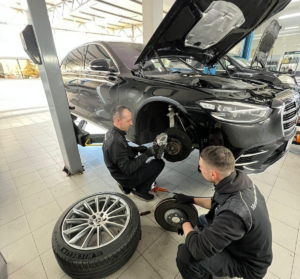
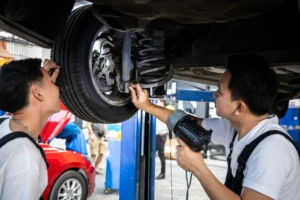
A BMW is designed to provide a combination of comfort, stability, steering response and driving control.
When the suspension system is working correctly, your BMW should feel composed over bumps, stable through corners and predictable when braking.
But suspension components wear over time.
You may first notice something small:
A clunk over a speed bump.
Then perhaps the steering feels different.
Your tyres begin wearing unevenly.
The ride becomes harsher.
Or the car starts feeling less stable than it used to.
These changes shouldn’t automatically be dismissed as normal wear.
Your BMW suspension includes multiple components that work together, including shock absorbers, springs, control arms, bushes, ball joints, stabiliser links and other steering and suspension parts.
When one component starts failing, it can affect the way the entire vehicle feels and handles.
⚡ Quick Answer: What Are the Signs of BMW Suspension Problems?
The most common warning signs include:
- Clunking or knocking noises
- Rough or unusually bouncy ride
- BMW pulling to one side
- Uneven tyre wear
- Excessive body movement
- Steering vibration
- Nose-diving when braking
- Vehicle leaning during corners
- Uneven ride height
- Poor stability or handling
A suspension problem doesn’t always mean the shock absorbers need replacing.
The cause could involve bushes, control arms, ball joints, stabiliser links, springs, wheel alignment or other components.
A proper inspection is the best way to identify the actual fault.
🔧 BMW Suspension: What Does It Actually Do?
Your BMW’s suspension system has several important jobs.
It helps:
- Keep the tyres in contact with the road
- Absorb bumps and road imperfections
- Maintain vehicle stability
- Support steering control
- Improve braking stability
- Control body movement
- Provide a comfortable driving experience
The suspension also works closely with the steering, tyres, brakes and wheel alignment.
That’s why a suspension problem can sometimes feel like a steering or tyre problem.
🚨 10 Warning Signs of BMW Suspension Problems
1. 🔊 Clunking or Knocking Noises
One of the most noticeable suspension warning signs is an unfamiliar clunk, knock or tapping sound.
You may hear it when:
- Driving over speed bumps
- Going over potholes
- Turning into a driveway
- Driving on uneven roads
- Accelerating or braking
Possible areas to investigate include:
- Suspension bushes
- Control arms
- Ball joints
- Stabiliser links
- Shock absorber mounts
- Other suspension connections
Don’t automatically assume the noise means the shock absorber has failed.
Several different components can produce similar sounds.
2. 🚗 Your BMW Feels Too Bouncy
After going over a bump, your BMW should settle reasonably quickly.
If the vehicle continues to bounce or oscillate, worn shock absorbers or other suspension problems may need to be investigated.
You might notice:
- Excessive bouncing
- Poor body control
- Floating sensation
- Less confidence over uneven roads
A vehicle that feels noticeably different from its normal behaviour should be inspected.
3. ↔️ BMW Pulls to One Side
Does your BMW seem to drift or pull left or right when driving on a relatively straight road?
Possible causes can include:
- Wheel alignment
- Tyre pressure
- Uneven tyre wear
- Suspension components
- Steering components
- Road surface
This is important because not every pulling problem is a suspension problem.
A proper inspection should check the tyres, alignment, steering and suspension together.
4. 🛞 Uneven Tyre Wear
Look at the tread across your tyres.
If one side is wearing significantly faster than another, something may need attention.
Possible causes include:
- Incorrect wheel alignment
- Suspension wear
- Damaged suspension components
- Incorrect tyre pressure
- Steering geometry problems
Why does this matter?
Your tyres are your BMW’s only contact with the road.
Suspension and alignment problems can affect how evenly that contact occurs.
If you notice unusual tyre wear, don’t simply replace the tyre without investigating why it wore unevenly.
5. 📉 Excessive Body Movement
Your BMW should feel controlled during normal driving.
If the body moves excessively when you:
- Accelerate
- Brake
- Turn
- Change lanes
there may be an issue with the suspension or related systems.
You might describe the feeling as:
“The car doesn’t feel planted anymore.”
This change in driving behaviour is worth investigating.
6. 🫨 Steering Wheel Vibration
A vibrating steering wheel can have several causes.
Possible areas include:
- Wheel balancing
- Tyres
- Wheel alignment
- Suspension components
- Steering components
- Wheel or brake-related issues
If the vibration appears mainly over bumps or while cornering, suspension or steering components may need inspection.
If it occurs mainly at certain speeds, tyre and wheel checks may also be important.
The symptom alone cannot identify the exact cause.
7. 🛑 BMW Dips Forward When Braking
When braking, some amount of front-end movement is normal.
However, excessive nose-diving can indicate reduced suspension control or another issue affecting vehicle dynamics.
Possible areas to inspect include:
- Shock absorbers
- Springs
- Suspension components
- Braking system
Because braking and suspension work together to maintain vehicle stability, unusual behaviour during braking should be checked promptly.
8. ↪️ Your BMW Leans Excessively in Corners
A BMW should remain relatively controlled when cornering.
If the vehicle suddenly feels like it is leaning more than usual, possible areas to investigate include:
- Shock absorbers
- Springs
- Stabiliser components
- Suspension bushes
- Other suspension parts
This can affect handling and driver confidence.
9. 📏 Uneven Ride Height
Stand back and look at your BMW from a level position.
Does one corner appear lower than another?
An uneven ride height can potentially be related to:
- Broken or weak spring
- Suspension component problem
- Air suspension issue, where fitted
- Damaged suspension component
- Other mechanical issues
If one side of the vehicle suddenly sits lower, it should be inspected rather than ignored.
10. ⚠️ Your BMW No Longer Feels Stable
Sometimes there isn’t one obvious noise.
Instead, you simply notice:
“My BMW doesn’t feel the way it used to.”
Maybe:
- Steering feels less precise
- The car moves around more
- Cornering feels different
- Bumps feel harsher
- The vehicle feels unsettled
- The steering requires more correction
These changes can be early indicators of suspension, steering, tyre or alignment problems.
A professional inspection can help determine what has changed.
🧩 Common BMW Suspension Components That Can Wear
BMW suspension systems contain many components, and different models use different designs.
Common components that may require inspection include:
Shock Absorbers
Control suspension movement and help keep the vehicle stable.
Springs
Support the vehicle’s weight and contribute to ride height.
Control Arms
Help control wheel movement and suspension geometry.
Bushes
Absorb movement and vibration between suspension components.
Ball Joints
Allow controlled movement between suspension components and steering-related parts.
Stabiliser Links
Connect parts of the anti-roll system and help control body movement during cornering.
Suspension Mounts
Help connect suspension components to the vehicle structure while managing movement and vibration.
Air Suspension Components
Some BMW models use air suspension systems, which have different components and failure points from conventional suspension.
🔍 BMW Suspension Problems vs Wheel Alignment Problems
These two issues are often confused.
Wheel Alignment Problem
May cause:
- Vehicle pulling
- Uneven tyre wear
- Off-centre steering wheel
- Poor tracking
Suspension Problem
May cause:
- Clunking
- Excessive bouncing
- Poor body control
- Uneven ride height
- Steering changes
- Unusual tyre wear
But they can overlap.
A worn suspension component can affect wheel geometry and alignment.
That’s why simply performing a wheel alignment may not solve the problem if a suspension component is already worn or damaged.
🇸🇬 BMW Suspension Problems in Singapore
Singapore’s roads are generally well maintained, but BMWs still encounter:
- Speed bumps
- Road joints
- Potholes
- Uneven surfaces
- Kerbs
- Stop-start traffic
- Frequent low-speed manoeuvring
Repeated impacts can contribute to wear in suspension and steering components over time.
A suspension problem may also become more noticeable during:
Parking → Speed bumps → Tight turns → Braking → Uneven roads
If you start hearing a new clunk or notice the BMW behaving differently, it’s worth having the suspension checked.
🛑 Can You Drive a BMW With a Suspension Problem?
It depends on the severity.
A minor noise does not necessarily mean the vehicle is immediately unsafe, but it should still be investigated.
Avoid unnecessary driving if you notice:
- A broken spring
- Severe steering instability
- Major suspension damage
- A wheel sitting at an unusual angle
- Sudden major ride-height change
- Severe vibration
- Loss of vehicle control
- A component visibly damaged or detached
If you’re unsure whether the vehicle is safe to drive, professional inspection is the safest approach.
🔧 How Are BMW Suspension Problems Diagnosed?
A good suspension diagnosis should involve more than simply listening for a noise.
Step 1 — Ask About the Symptoms
The technician may ask:
- When does the noise occur?
- Is it worse over bumps?
- Does it happen while turning?
- Does the car pull left or right?
- When did the problem start?
- Has the vehicle recently hit a pothole or kerb?
These details can help narrow down the possible cause.
Step 2 — Visual Inspection
The suspension can be checked for:
- Damaged components
- Fluid leakage
- Worn bushes
- Broken springs
- Loose connections
- Uneven ride height
- Other visible problems
Step 3 — Check Related Components
Because suspension symptoms can overlap with steering, tyres and brakes, these areas may also need inspection.
Step 4 — Wheel Alignment Check
If the symptoms suggest a geometry issue, alignment measurements can help identify whether the wheels are correctly positioned.
Step 5 — Road Test
Where appropriate, a road test can help reproduce:
- Clunking
- Pulling
- Vibration
- Bouncing
- Handling changes
The objective:
Identify the worn or damaged component—not simply replace parts until the symptom disappears.
📊 BMW Suspension Symptoms & Possible Causes
| Symptom | Possible Areas to Investigate |
|---|---|
| Clunking over bumps | Bushes, control arms, links, mounts |
| Bouncy ride | Shock absorbers or suspension components |
| Pulling to one side | Alignment, tyres, steering or suspension |
| Uneven tyre wear | Alignment, suspension, tyre pressure |
| Steering vibration | Wheels, tyres, alignment, steering or suspension |
| Nose-diving | Suspension/braking-related issues |
| Excessive cornering lean | Shocks, springs, stabiliser system |
| Uneven ride height | Spring, air suspension or other component |
| Poor handling | Suspension, steering, tyres or alignment |
| New suspension noise | Multiple possible suspension components |
These are possible areas to investigate, not a diagnosis of a specific BMW.
💰 How Much Does BMW Suspension Repair Cost in Singapore?
There is no fixed price for BMW suspension repair because the cost depends on the actual fault.
Factors can include:
- BMW model
- Model year
- Suspension type
- Component affected
- Number of components requiring replacement
- Parts selected
- Labour
- Wheel alignment requirements
For example, replacing a single worn suspension link is very different from repairing multiple control arms, shock absorbers or air suspension components.
The correct process is:
Inspect → Diagnose → Identify worn components → Quote → Repair → Verify
This helps avoid unnecessary replacement of parts that are still in good condition.
🛡️ How to Reduce BMW Suspension Problems
You can’t prevent normal suspension wear completely, but you can reduce the risk of unexpected problems.
✔ Check your tyres regularly
Look for uneven wear and maintain the correct tyre pressure.
✔ Don’t ignore new noises
A small clunk can be easier to investigate than a suspension problem that has been allowed to develop.
✔ Be careful around potholes and kerbs
Hard impacts can damage wheels, tyres and suspension components.
✔ Pay attention to handling changes
If the BMW suddenly feels different, have it checked.
✔ Maintain correct wheel alignment
Alignment should be checked when symptoms suggest a geometry problem or after relevant suspension work.
✔ Follow your BMW’s maintenance requirements
Regular inspections can help identify worn components before they become a larger issue.
❓ BMW Suspension Problems — Frequently Asked Questions
What are the most common signs of BMW suspension problems?
Common signs include clunking noises, excessive bouncing, uneven tyre wear, pulling, steering vibration, excessive body movement, uneven ride height and changes in handling.
Why does my BMW make a clunking noise over bumps?
A clunking noise can come from several components, including control arms, bushes, stabiliser links, ball joints or suspension mounts. An inspection is needed to identify the actual source.
How do I know if my BMW shock absorbers are bad?
Possible signs include excessive bouncing, poor body control, nose-diving during braking, uneven tyre wear and a less stable ride. Physical inspection is needed to confirm the condition of the shock absorbers.
Can bad suspension cause uneven tyre wear?
Yes. Worn or damaged suspension components can affect wheel movement and geometry, potentially contributing to uneven tyre wear. Wheel alignment and tyre condition should also be checked.
Why does my BMW pull to one side?
Possible causes include tyre pressure, wheel alignment, steering components or suspension problems. It should not automatically be assumed to be a suspension fault.
Can suspension problems affect BMW steering?
Yes. Suspension and steering systems work closely together. Worn components can affect steering feel, stability and wheel geometry.
Is it safe to drive a BMW with suspension problems?
It depends on the problem. Severe suspension damage, major instability, unusual wheel position or significant loss of control requires prompt attention. Even less severe symptoms should be diagnosed before they worsen.
How often should BMW suspension be checked?
There isn’t one universal inspection interval for every BMW. Suspension should be checked during routine maintenance and whenever you notice unusual noises, tyre wear, ride-height changes or handling problems.
Can a pothole damage BMW suspension?
Yes. A significant pothole impact can potentially damage tyres, wheels, alignment or suspension components.
Does BMW suspension repair require wheel alignment?
Not always, but alignment may be necessary after certain suspension repairs or when the suspension problem has affected wheel geometry. The requirement depends on the work performed.
🚘 Is Your BMW Ride No Longer the Same?
If your BMW has started:
Clunking → Bouncing → Pulling → Vibrating → Wearing tyres unevenly → Handling differently
don’t wait until the problem becomes more noticeable.
📲 Contact ContiExpert on WhatsApp
Send us:
- BMW model
- Model year
- Mileage
- Photo/video of the problem if possible
- Description of the noise or handling issue
- When the symptom occurs
- Any recent pothole or kerb impact
This gives the diagnostic team useful information before the vehicle is inspected.
ContiExpert — European Car Specialist in Singapore
If your BMW doesn’t feel like it used to, let the suspension be checked before a small problem becomes a bigger one.