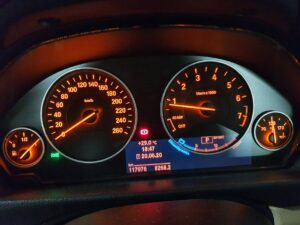
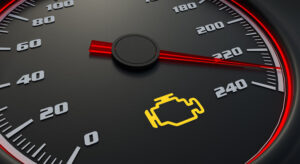
Your European car should accelerate smoothly, idle steadily and respond consistently when you press the accelerator.
If the engine suddenly starts shaking, stumbling, hesitating or losing power, you may be experiencing an engine misfire.
An engine misfire occurs when one or more cylinders fail to burn the air-fuel mixture correctly.
It can happen in a BMW, Mercedes-Benz, Audi, Volkswagen, Volvo or another European vehicle, and the cause can range from a relatively simple ignition problem to a more complicated fuel, sensor or engine issue.
The important thing is not to simply clear the warning light and continue driving.
A misfire should be diagnosed properly—especially if the check engine light is flashing or the engine is running very roughly.
⚡ Quick Answer: What Is an Engine Misfire?
An engine misfire happens when one or more cylinders do not complete combustion correctly.
A petrol engine generally needs three key things for proper combustion:
Air + Fuel + Ignition = Combustion
If one of these is missing or not working correctly, the cylinder may fail to produce its normal amount of power.
Common causes include:
- Worn spark plugs
- Faulty ignition coils
- Fuel injector problems
- Vacuum or intake leaks
- Airflow sensor problems
- Fuel delivery issues
- Carbon buildup
- Engine timing problems
- Low compression
- Electrical or ECU-related faults
The most important warning:
If the check engine light is flashing and the engine is shaking or running badly, avoid continuing to drive unless necessary for safety. Seek professional diagnosis promptly.
🔍 What Does a Misfire Feel Like?
A misfire can feel different depending on its cause and severity.
You may notice:
🚗 Engine Shaking
The vehicle may vibrate while idling or accelerating.
⚡ Hesitation
The engine may hesitate when you press the accelerator.
📉 Loss of Power
The car may feel slower than normal or struggle to accelerate.
🔄 Rough Idle
The engine may feel unstable when the vehicle is stationary.
⛽ Increased Fuel Consumption
An engine that is not combusting efficiently may consume more fuel.
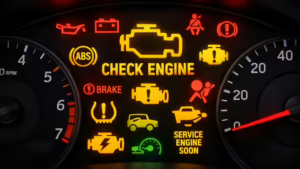
🚨 Check Engine Light
A misfire can trigger the check engine light.
💥 Jerking While Driving
The vehicle may jerk during acceleration or under load.
🔊 Unusual Engine Sound
The engine may sound uneven or inconsistent.
🚨 Flashing vs Steady Check Engine Light
This distinction is important.
| Check Engine Light | Possible Situation | Recommended Action |
|---|---|---|
| 🟡 Steady | Fault detected | Arrange diagnosis |
| 🟡 Steady + rough running | Possible active engine problem | Have the vehicle checked soon |
| 🔴 Flashing + engine shaking | Potentially serious active misfire | Stop driving when safe and seek professional assistance |
| Flashing + loss of power | Serious fault may be occurring | Avoid unnecessary driving |
A flashing check engine light can indicate an active misfire that may allow unburned fuel to enter the exhaust system and potentially damage emissions components.
Don’t treat a flashing warning as a minor dashboard notification.
🔧 10 Common Causes of European Car Engine Misfires
1. Worn or Faulty Spark Plugs
Spark plugs ignite the air-fuel mixture in petrol engines.
Over time, spark plugs can wear or develop problems that affect ignition.
Possible symptoms include:
- Rough idle
- Difficult starting
- Hesitation
- Reduced power
- Poor fuel economy
- Check engine light
- Misfire under acceleration
If one or more spark plugs are not producing a strong, consistent spark, the affected cylinder may misfire.
2. Faulty Ignition Coils
Ignition coils provide the electrical energy needed to create the spark.
A failing coil can cause a single-cylinder or multiple-cylinder misfire.
Common symptoms:
- Engine shaking
- Rough idle
- Poor acceleration
- Check engine light
- Intermittent misfire
- Loss of power
European vehicles often use individual ignition coils for each cylinder, but the exact setup varies by engine.
3. Fuel Injector Problems
The engine needs the correct amount of fuel at the correct time.
A faulty, clogged or malfunctioning injector can disrupt fuel delivery to a cylinder.
This can lead to:
- Misfires
- Poor acceleration
- Rough running
- Increased fuel consumption
- Starting problems
- Check engine light
Injector problems can require proper testing rather than simply replacing the component based on symptoms.
4. Vacuum or Intake Air Leaks
An engine needs the correct air-fuel mixture.
If unmetered air enters through a leak, it can affect combustion.
Possible leak points include:
- Vacuum hoses
- Intake pipes
- Seals
- Connections
- Intake system components
You may notice:
Rough idle + hesitation + misfire + check engine light
A proper inspection can help locate the source.
5. Airflow Sensor Problems
Modern European vehicles use sensors to monitor air entering the engine.
A faulty airflow sensor can provide inaccurate information to the engine control system.
Possible symptoms include:
- Rough running
- Poor acceleration
- Increased fuel consumption
- Hesitation
- Check engine light
- Misfire
However, a sensor-related fault code doesn’t always mean the sensor itself needs replacement. Further diagnosis may be necessary.
6. Fuel Pressure Problems
The fuel system must provide sufficient pressure for proper engine operation.
Problems can involve:
- Fuel pump
- Fuel pressure regulator
- Fuel filter, where applicable
- Fuel pressure sensor
- Fuel supply system
If fuel pressure is too low or unstable, the engine may struggle to maintain proper combustion.
7. Carbon or Deposit Buildup
Some European engines can develop deposits over time.
Depending on the engine design and driving conditions, deposits can affect airflow or combustion.
Possible symptoms include:
- Rough idle
- Hesitation
- Reduced performance
- Misfire
- Poor throttle response
The appropriate cleaning or repair method depends on the engine and the underlying cause.
8. Engine Timing Problems
Correct engine timing is essential for combustion.
If timing is incorrect because of a mechanical or control-system problem, the engine may run poorly or misfire.
Possible related symptoms include:
- Rough running
- Loss of power
- Difficult starting
- Unusual engine noise
- Check engine light
Timing-related faults require proper diagnosis because they can involve significant engine components.
9. Low Engine Compression
Each cylinder needs sufficient compression for effective combustion.
Low compression can result from mechanical problems involving components such as:
- Valves
- Piston rings
- Cylinder components
- Head gasket
If ignition and fuel systems appear normal but the misfire remains, compression testing or other engine tests may be required.
10. Electrical or ECU-Related Problems
Modern European cars depend heavily on electronic control systems.
A misfire can sometimes be associated with:
- Wiring problems
- Electrical connections
- Sensor signals
- ECU-related faults
- Communication issues
This is why proper diagnostic equipment and systematic testing are important.
🧩 BMW, Mercedes-Benz & Audi Misfires
Engine misfires can occur across different European brands, but the diagnostic approach can vary according to the engine and vehicle.
BMW Engine Misfire
A BMW may experience misfires related to:
- Spark plugs
- Ignition coils
- Fuel injectors
- Air leaks
- Sensors
- Fuel delivery
- Engine timing
If your BMW is shaking under acceleration with a check engine light, diagnosis should be performed before replacing multiple components.
Mercedes-Benz Engine Misfire
Mercedes-Benz engines can develop ignition, fuel, air or electronic faults that result in misfires.
Possible symptoms include:
- Rough idle
- Engine vibration
- Poor acceleration
- Check engine warning
- Increased fuel consumption
The exact cause depends on the specific Mercedes-Benz engine and fault codes.
Audi Engine Misfire
Audi engines can also experience ignition, fuel, air intake, sensor and mechanical problems that cause misfires.
Symptoms may include:
- Shaking
- Hesitation
- Loss of power
- Flashing check engine light
- Rough running
A diagnostic scan combined with physical testing can help identify the affected cylinder and investigate the underlying cause.
🇸🇬 Why Misfires Can Be Noticeable in Singapore Traffic
Singapore driving often involves:
- Stop-start traffic
- Frequent idling
- Short journeys
- Heavy air-conditioning use
- Frequent acceleration and braking
A vehicle with an existing ignition, fuel or airflow problem may show symptoms particularly clearly during low-speed driving or acceleration from a stop.
If your European car suddenly starts shaking at traffic lights or hesitating when moving off, don’t automatically assume it is normal.
A change in engine behaviour deserves attention.
🛑 Can You Drive a European Car With an Engine Misfire?
It depends on the severity and symptoms.
A mild or intermittent issue should still be diagnosed soon.
But avoid unnecessary driving if your vehicle has:
- Flashing check engine light
- Severe engine shaking
- Major loss of power
- Strong fuel smell
- Smoke
- Overheating
- Loud or unusual engine noises
- Severe hesitation
- Repeated misfires
Why?
An active misfire can allow unburned fuel to enter the exhaust system. Depending on the vehicle and circumstances, this can damage emissions components such as the catalytic converter.
If the check engine light is flashing, stop driving when safe and seek professional assistance.
🔍 How Is an Engine Misfire Diagnosed?
Finding the cause of a misfire requires more than simply reading a fault code.
Step 1 — Diagnostic Scan
European-car-compatible diagnostic equipment can identify stored or active fault codes.
The scan may reveal information such as:
- Which cylinder is misfiring
- Whether the misfire is intermittent
- Whether other systems are reporting faults
- Whether fuel or air-related codes are present
Step 2 — Identify the Affected Cylinder
For example, the diagnostic system may indicate a misfire involving a particular cylinder.
That gives the technician a starting point.
It does not automatically mean that the spark plug or ignition coil is faulty.
Step 3 — Inspect the Ignition System
The technician may check:
- Spark plugs
- Ignition coils
- Wiring
- Electrical connections
Step 4 — Check Fuel Delivery
If ignition components appear normal, fuel delivery may need to be investigated.
This can involve:
- Injectors
- Fuel pressure
- Fuel supply
- Related sensors
Step 5 — Check Air Intake
Potential sources include:
- Vacuum leaks
- Intake leaks
- Airflow sensors
- Throttle system
- Related hoses and connections
Step 6 — Perform Further Engine Testing
If the basic systems are functioning correctly, further testing may be required.
Depending on the symptoms, this could include:
- Compression testing
- Timing checks
- Electrical testing
- Additional sensor testing
- Mechanical engine inspection
The goal is simple:
Find why the cylinder is misfiring—not just clear the warning light.
📊 Engine Misfire Symptoms & Possible Causes
| Symptom | Possible Areas to Investigate |
|---|---|
| Engine shaking at idle | Spark plugs, coils, injectors, air leaks |
| Misfire during acceleration | Ignition, fuel delivery, boost/air system |
| Flashing check engine light | Active misfire |
| Poor fuel economy | Ignition, fuel or air-fuel mixture |
| Loss of power | Misfire, fuel, air or engine problem |
| Difficult starting | Ignition, fuel, timing or compression |
| Rough idle | Ignition, vacuum leak, injector or sensor |
| Engine jerking | Ignition, fuel or drivetrain-related issue |
| Single-cylinder misfire | Plug, coil, injector, compression or wiring |
| Multiple-cylinder misfire | Air/fuel supply, electrical, timing or engine issue |
These are possible causes, not a diagnosis of a specific vehicle.
💰 How Much Does European Car Misfire Repair Cost in Singapore?
There is no single price for fixing an engine misfire.
The cost depends on:
- Vehicle brand and model
- Engine type
- Cause of the misfire
- Diagnostic requirements
- Parts required
- Labour
- Whether the issue is electrical, fuel-related or mechanical
For example, replacing a worn spark plug can be very different from repairing an injector, wiring problem or internal engine fault.
The right approach is:
Diagnose → Identify the cause → Quote the repair → Repair → Verify
This helps avoid replacing expensive parts unnecessarily.
🛡️ How to Prevent Engine Misfires
You cannot prevent every misfire, but good maintenance can help reduce the risk and catch problems earlier.
✔ Follow the correct service schedule
Replace service items according to the requirements of your specific vehicle and engine.
✔ Don’t ignore warning lights
A warning light is often the first indication that the vehicle has detected a problem.
✔ Pay attention to small changes
A slight hesitation today can become a much bigger problem later.
✔ Address starting problems
Repeated difficult starting can indicate an underlying ignition, fuel or electrical issue.
✔ Maintain the correct fuel and ignition system
Spark plugs, coils, injectors and related components all contribute to proper combustion.
✔ Diagnose recurring problems
If a misfire keeps returning after a repair, investigate the underlying cause instead of repeatedly replacing the same type of component.
❓ European Car Engine Misfire FAQs
What causes an engine misfire?
Common causes include faulty spark plugs, ignition coils, fuel injectors, air leaks, fuel pressure problems, sensor faults, timing problems and low engine compression.
What does an engine misfire feel like?
You may feel shaking, hesitation, jerking, rough idling or reduced power. The check engine light may also appear.
Can a bad spark plug cause a misfire?
Yes. A worn or faulty spark plug can prevent proper ignition in a cylinder and cause a misfire.
Can a faulty ignition coil cause an engine misfire?
Yes. A failing ignition coil can prevent the required spark from reaching the cylinder correctly.
Why is my European car shaking at idle?
An unstable idle can have several causes, including engine misfire, vacuum leaks, ignition problems, fuel delivery issues or sensor faults. Diagnosis is needed to identify the actual cause.
Why is my check engine light flashing?
A flashing check engine light can indicate an active and potentially serious misfire. Avoid unnecessary driving and seek professional assistance.
Can I drive with an engine misfire?
A vehicle with a significant or active misfire should not be driven unnecessarily. A flashing check engine light, severe shaking or major power loss requires prompt attention.
Can a misfire damage my engine?
A persistent misfire can cause additional problems depending on its cause and severity. An active misfire can also expose the exhaust system to unburned fuel, potentially damaging emissions components.
Why does my car misfire only when accelerating?
A misfire under acceleration can occur when the engine requires more ignition energy, fuel or airflow. Possible causes include ignition coils, spark plugs, injectors, fuel pressure or air/boost problems.
How is a European car misfire diagnosed?
Diagnosis generally starts with a compatible diagnostic scan, followed by inspection and testing of ignition, fuel, air intake, sensors and, where necessary, mechanical engine components.
🚘 BMW, Mercedes-Benz or Audi Misfiring?
Don’t wait until your European car becomes difficult to drive.
If you’re experiencing:
Shaking → Hesitation → Jerking → Loss of Power → Check Engine Light
the next step should be proper diagnosis.
📲 Contact ContiExpert on WhatsApp
Send:
- Vehicle make and model
- Model year
- Mileage
- Photo of the dashboard warning
- Description of the symptoms
- When the misfire occurs
- Whether the check engine light is steady or flashing
This information can help provide a clearer starting point for the diagnostic process.
ContiExpert — European Car Specialist in Singapore
Don’t just clear the warning light. Find the reason behind the misfire.