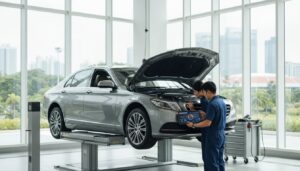
A Mercedes-Benz is engineered to deliver luxury, performance, and reliability. However, even the most well-built vehicles can experience engine overheating if the cooling system isn’t properly maintained or a component fails.
An overheating engine should never be ignored. What starts as a minor coolant leak or faulty thermostat can quickly escalate into severe engine damage, including a blown head gasket, warped cylinder head, or even complete engine failure.
If your Mercedes temperature gauge is rising, a coolant warning light appears, or steam is coming from under the bonnet, immediate action is essential.
In this guide, you’ll learn:
- Why Mercedes engines overheat
- The most common causes
- Warning signs you should never ignore
- What to do if your engine overheats
- Professional repair solutions
- Maintenance tips to prevent future overheating
Whether you drive a Mercedes-Benz A-Class, C-Class, E-Class, S-Class, GLC, GLE, CLA, or G-Class, this guide will help you protect your vehicle and avoid expensive repairs.
Why Do Mercedes Engines Overheat?
Mercedes engines operate within a carefully controlled temperature range. The cooling system continuously circulates coolant through the engine to absorb heat and release it through the radiator.
If any part of this system fails, heat builds up rapidly, causing the engine temperature to rise beyond safe operating levels.
Driving with an overheating engine can result in permanent engine damage within a short period.
Common Warning Signs of an Overheating Mercedes
Recognising the early signs of overheating can help prevent serious mechanical failures.
Watch for these warning signs:
- Temperature gauge moving into the red zone
- Engine temperature warning light
- Steam coming from the engine bay
- Sweet smell from leaking coolant
- Reduced engine performance
- Air-conditioning blowing warm air
- Coolant leaking beneath the vehicle
- Engine entering limp mode
- Unusual knocking or ticking noises
If you notice any of these symptoms, stop driving when it is safe to do so and have your vehicle inspected.
1. Low Coolant Level
Low coolant is one of the most common causes of engine overheating.
Coolant transfers heat away from the engine and prevents excessive temperatures.
Low coolant may result from:
- Small coolant leaks
- Worn hoses
- Radiator damage
- Expansion tank leaks
- Water pump failure
Never continue driving if the coolant level is significantly low.
2. Faulty Thermostat
The thermostat controls coolant flow between the engine and radiator.
If it becomes stuck in the closed position, coolant cannot circulate properly.
Common symptoms include:
- Rapid temperature increase
- Engine overheating shortly after startup
- Poor heater performance
- Fluctuating temperature gauge
Replacing a faulty thermostat is usually far less expensive than repairing engine damage caused by overheating.
3. Radiator Problems
The radiator removes heat from the coolant before it returns to the engine.
Common radiator issues include:
- Internal blockages
- External debris
- Corrosion
- Coolant leaks
- Damaged radiator fins
A damaged radiator reduces cooling efficiency and increases the risk of overheating.
4. Water Pump Failure
The water pump circulates coolant throughout the engine.
A failing water pump may cause:
- Engine overheating
- Coolant leaks
- Grinding noises
- Coolant circulation problems
Ignoring a faulty water pump can quickly lead to severe engine damage.
5. Cooling Fan Malfunction
When driving slowly or stopped in traffic, the cooling fan helps maintain proper engine temperature.
A faulty fan motor, relay, or temperature sensor may prevent the fan from operating correctly.
Symptoms include:
- Overheating in traffic
- Normal temperature at highway speeds
- Air-conditioning performance decreases while idling
Professional diagnostics can identify the exact cause.
6. Coolant Hose Leaks
Coolant hoses transport coolant throughout the cooling system.
Over time, rubber hoses can:
- Crack
- Harden
- Swell
- Develop leaks
Even a small leak can gradually lower coolant levels and lead to overheating.
7. Faulty Radiator Cap
Although often overlooked, the radiator cap maintains pressure within the cooling system.
If the cap fails:
- Coolant may escape
- Pressure drops
- Boiling point decreases
- Engine temperature rises
Replacing a faulty radiator cap is a simple repair that can prevent bigger problems.
8. Cooling System Air Locks
Air trapped inside the cooling system restricts coolant circulation.
Air locks often occur after:
- Coolant replacement
- Cooling system repairs
- Coolant leaks
Proper bleeding of the cooling system restores normal coolant flow.
9. Clogged Coolant Passages
Old coolant can allow rust, mineral deposits, and contaminants to build up inside the cooling system.
This restricts coolant flow and reduces cooling efficiency.
Regular coolant replacement helps prevent internal blockages.
What Should You Do If Your Mercedes Starts Overheating?
If your engine temperature rises unexpectedly:
Stay Calm
Avoid sudden acceleration or heavy braking.
Turn Off the Air-Conditioning
Switching off the air-conditioning reduces engine load.
You can turn the cabin heater on to help remove excess engine heat if necessary.
Find a Safe Place to Stop
Pull over safely as soon as possible.
Do not continue driving if the temperature gauge enters the red zone.
Switch Off the Engine
Allow the engine to cool naturally.
Never remove the coolant reservoir cap while the engine is still hot, as pressurised coolant can cause serious burns.
Arrange a Professional Inspection
Even if the temperature returns to normal, the cause should be diagnosed before driving the vehicle again.
Why You Should Never Ignore Engine Overheating
Continuing to drive with an overheating engine can cause:
- Blown head gasket
- Warped cylinder head
- Engine block damage
- Turbocharger damage
- Coolant contamination
- Complete engine failure
Early diagnosis is significantly less expensive than replacing major engine components.
How Mercedes Specialists Diagnose Overheating Problems
Professional technicians follow a systematic diagnostic process.
Typical inspections include:
- Computer diagnostic scan
- Cooling system pressure test
- Coolant leak inspection
- Thermostat testing
- Water pump inspection
- Radiator flow test
- Cooling fan operation test
- Coolant quality inspection
- Road test
This comprehensive approach identifies the root cause instead of simply treating the symptom.
How to Prevent Mercedes Engine Overheating
Preventive maintenance is the best way to protect your engine.
Follow these maintenance tips:
- Check coolant levels regularly.
- Replace coolant according to Mercedes maintenance recommendations.
- Inspect hoses during every service.
- Repair coolant leaks immediately.
- Replace worn thermostats and water pumps when necessary.
- Monitor the temperature gauge while driving.
- Never ignore warning lights.
- Have the cooling system inspected during routine servicing.
Regular maintenance greatly reduces the risk of overheating.
Why Choose a Mercedes Specialist?
Mercedes vehicles feature advanced cooling systems that require specialised knowledge and diagnostic equipment.
An experienced Mercedes workshop offers:
- Manufacturer-level diagnostic tools
- Skilled European vehicle technicians
- Genuine or OEM-quality replacement parts
- Accurate fault diagnosis
- Transparent repair recommendations
- High-quality workmanship
Choosing a specialist helps ensure long-lasting repairs and reliable engine performance.
Frequently Asked Questions
What causes a Mercedes engine to overheat?
Common causes include low coolant levels, thermostat failure, radiator problems, water pump failure, cooling fan faults, coolant leaks, and blocked cooling passages.
Can I drive if my Mercedes is overheating?
No. Driving with an overheating engine can cause serious damage. Stop safely, allow the engine to cool, and arrange a professional inspection.
How do I know if my cooling system has a leak?
Signs include low coolant levels, coolant puddles beneath the vehicle, a sweet smell, frequent coolant top-ups, or visible coolant around the engine bay.
How often should Mercedes coolant be replaced?
Follow the maintenance schedule recommended for your specific Mercedes model. Regular coolant replacement helps maintain cooling efficiency and protects the engine from corrosion.
Can overheating damage the engine permanently?
Yes. Severe overheating can damage the cylinder head, head gasket, engine block, and turbocharger, resulting in costly repairs.
Why Singapore’s Climate Makes Cooling System Maintenance Even More Important
Singapore’s year-round hot and humid weather places additional stress on every vehicle’s cooling system. Long periods in slow-moving traffic, frequent idling, and daily commuting can cause engine temperatures to rise faster than in cooler climates.
That’s why regular cooling system inspections are especially important for Mercedes owners in Singapore. Preventive maintenance helps ensure your vehicle performs reliably in local driving conditions and reduces the risk of unexpected overheating.
Keep Your Mercedes Running Cool with Volt Autocare
Engine overheating is one of the most serious problems any vehicle can experience, but it’s also one of the most preventable. Regular servicing, early diagnosis, and prompt repairs can protect your engine and save you from costly breakdowns.
At Volt Autocare, we specialise in Mercedes-Benz diagnostics, cooling system repairs, radiator servicing, thermostat replacement, water pump repairs, and complete engine maintenance. Our experienced technicians use advanced diagnostic equipment and genuine or OEM-quality parts to accurately identify overheating issues and restore your vehicle’s performance.
If your Mercedes is showing signs of overheating or a cooling system problem, contact Volt Autocare today to book a professional inspection and keep your vehicle performing at its best.