Beyond the scheduled dashboard reminder, your precision-engineered Mercedes-Benz communicates its needs in subtle ways. A slight hesitation during acceleration, a new sound on your daily commute, or a faint warning light can be easy to dismiss. Yet, for many owners in Singapore, the uncertainty of whether these are minor quirks or early warnings of a major expense is a constant concern. Proactively scheduling a professional mercedes service is key to avoiding complex and costly repairs down the line.
This guide is designed to provide clarity and confidence. We will detail five critical signs that indicate your vehicle requires expert attention from a specialist. By learning to recognise these symptoms, you can take decisive action to protect your car’s performance, ensure its safety, and maintain its long-term value. Understand what your Mercedes-Benz is telling you and drive with complete peace of mind.
Why Proactive Servicing is Non-Negotiable for Your Mercedes-Benz
Owning a Mercedes-Benz is a commitment to world-class engineering and performance. While the onboard ASSYST PLUS system diligently tracks your Service A and Service B intervals, true vehicle health management extends beyond these routine check-ups. In Singapore’s demanding climate, the relentless heat and high humidity significantly accelerate the degradation of critical components like rubber hoses, gaskets, and essential fluids. Proactive maintenance is therefore non-negotiable—it is the key to ensuring your safety, preserving peak performance, and protecting the long-term value of your vehicle.
Scheduled Maintenance vs. Symptom-Based Checks
A complete approach to vehicle care involves two distinct but equally important strategies. Scheduled maintenance is the preventive foundation, meticulously designed by Mercedes-Benz engineers based on time and mileage. In contrast, symptom-based checks are reactive, addressing specific issues you observe, such as a new noise, a dashboard warning, or a subtle drop in performance. A truly effective motor vehicle service plan integrates both, ensuring predictable wear is managed while catching unforeseen problems early.
The Cost of Neglect: Real-World Consequences
Postponing a check-up can quickly turn a minor issue into a major expense. Consider a faint brake squeak: addressing it early might involve a simple pad cleaning or replacement for a modest sum. If ignored, that squeak could be a sign of worn pads grinding against the rotors, escalating the repair to a S$1,500+ replacement of both pads and discs. Likewise, an engine warning light should never be disregarded. While it could be a simple sensor issue, it could also be an early indicator of a problem that could lead to catastrophic engine failure. A consistent and professional mercedes service history not only prevents these scenarios but also significantly boosts your car’s resale value, proving its meticulous upkeep to prospective buyers.
Your Mercedes-Benz is engineered to communicate its needs. Learning to listen and identify these early warnings is the most effective way to prevent expensive repairs and ensure every journey remains safe and reliable. The following five signs are your vehicle’s way of telling you it’s time for an expert check-up.
Sign #1: Changes in Braking Performance and Noises
Your Mercedes-Benz’s braking system is its most critical safety feature, engineered for precision and power. It relies on a harmony of components—including brake pads, rotors, and hydraulic fluid—to ensure you can stop safely and effectively. Ignoring early warning signs not only compromises your vehicle’s performance but also puts you and others on Singapore’s busy roads at serious risk. A professional inspection is the only way to guarantee everything is functioning correctly.
Audible Warnings: Squealing, Grinding, and Clicking
Your ears are often the first to detect brake problems. Pay close attention to these distinct sounds:
- Squealing: A high-pitched squeal is a common first alert. This sound is often caused by a built-in wear indicator on your brake pads, signalling that they are nearing the end of their service life and need replacement soon.
- Grinding: This is a severe warning that requires immediate attention. A harsh, metallic grinding noise means the brake pads are completely worn away, and the metal backing plate is scraping against the rotor. This causes significant damage and severely reduces stopping power.
- Clicking: A sharp clicking sound when applying or releasing the brakes can point to loose components, such as a shifting brake pad or a problem with the brake caliper.
Physical Sensations: Vibrations, Sponginess, and Pulling
Beyond sounds, how the vehicle feels during braking can reveal serious issues. If you notice any of these sensations, a professional mercedes service is essential to diagnose the problem correctly.
- Vibration or Pulsating Pedal: If you feel a shuddering or pulsing through the brake pedal or steering wheel when you brake, your brake rotors are likely warped. This reduces the contact surface for the pads, compromising braking efficiency.
- Spongy or Soft Pedal: A brake pedal that feels soft or sinks to the floor indicates a problem in the hydraulic system. This dangerous condition is often caused by air or moisture in the brake lines, which reduces stopping power. It underscores why regular fluid inspections are critical, a point reinforced by official sources like these NHTSA driving tips that advise on maintaining all essential vehicle fluids.
- Car Pulls to One Side: If your Mercedes-Benz veers left or right during braking, it can be caused by a stuck brake caliper or unevenly worn pads, creating a dangerous imbalance in braking force.
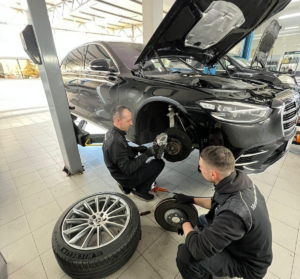
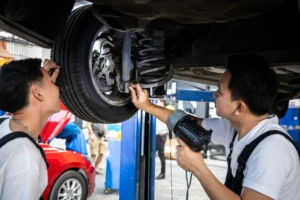
During a comprehensive mercedes service, our skilled technicians conduct an in-depth inspection of the entire braking system to ensure every component functions precisely as intended, restoring your vehicle’s safety and performance.
Sign #2: Dashboard Warning Lights You Must Not Ignore
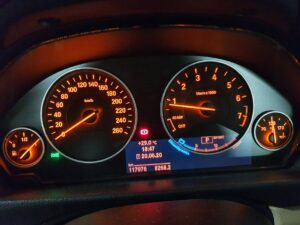
Your Mercedes-Benz dashboard is a sophisticated communication tool, not just a display. When a warning light illuminates, it’s a direct message from the vehicle’s Engine Control Unit (ECU) signalling that a system is operating outside its normal parameters. Ignoring these alerts can mask serious underlying mechanical or electrical issues, potentially leading to more complex and costly repairs. To ensure your vehicle’s performance and safety, it’s a clear signal to schedule a professional mercedes service for an accurate diagnosis.
The Check Engine Light (CEL)
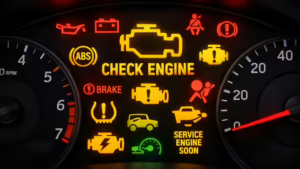
The amber Check Engine Light is one of the most common yet misunderstood warnings. It can indicate a wide range of issues, from something as minor as a loose petrol cap to a more severe problem like a failing catalytic converter. While a steady light warrants a check-up soon, a flashing CEL signals a critical issue, such as an engine misfire, that could cause irreversible damage. Continued driving is not advised. Common triggers include:
- Faulty oxygen sensors
- Worn-out spark plugs or ignition coils
- Mass airflow sensor failure
Brake System & ABS/ESP Lights
Your vehicle’s braking systems are paramount for safety. The red Brake Warning Light could mean your handbrake is engaged or indicate a serious issue like low brake fluid. Meanwhile, the amber ABS (Anti-lock Braking System) and ESP (Electronic Stability Program) lights point to faults within these crucial safety features. These systems are designed to maintain control during emergency braking and on slippery roads, making them essential for navigating Singapore’s unpredictable weather.
Oil Pressure & Coolant Temperature Warnings
These two red warnings demand your immediate attention. A Low Oil Pressure light means the engine is not getting the lubrication it needs to prevent metal-on-metal contact. You must pull over safely and turn off the engine immediately to prevent catastrophic failure. Similarly, a High Coolant Temperature warning indicates the engine is overheating. Stop the car as soon as it is safe, switch off the engine, and allow it to cool down before checking coolant levels. Ignoring this can lead to a warped cylinder head or complete engine seizure.
Sign #3: Unusual Noises, Vibrations, and Odours
Your Mercedes-Benz is engineered for a serene and seamless driving experience. As the driver, your senses are often the first line of defence in detecting potential issues. Any sudden change in the sound, feel, or smell of your vehicle is a clear signal that it requires professional attention. These sensory warnings frequently point to developing problems with the engine, suspension, or exhaust systems.
Ignoring these signs can lead to more significant and costly damage. A comprehensive mercedes service allows our skilled technicians to use advanced diagnostics to pinpoint the exact source of the problem, ensuring your vehicle’s performance and safety are restored.
Concerning Sounds from Under the Hood
Unfamiliar noises are your car’s way of communicating a problem. Listen for these specific sounds:
- Hissing: A persistent hissing noise could indicate a vacuum leak or a coolant leak, both of which can affect engine performance and temperature regulation.
- Knocking/Pinging: Sharp knocking or pinging sounds, especially during acceleration, can suggest serious engine issues related to timing or internal components.
- Whining: A high-pitched whining that changes with engine speed often points to problems with the power steering pump, alternator, or transmission.
Vibrations Felt Through the Steering Wheel or Seat
The smooth ride of your Mercedes-Benz should never be compromised by vibrations. If you feel a shudder or shake, note when it happens:
- Vibrations at specific speeds: A common symptom of unbalanced wheels or uneven tyre wear, which can affect handling and safety.
- Vibrations during acceleration: This may point to issues with the driveshaft, CV joints, or axles, which are critical drivetrain components.
- Vibrations while idling: A rough idle can be caused by worn-out spark plugs or failing engine mounts that are no longer absorbing engine vibrations properly.
Distinctive Smells to Watch Out For
An unusual odour is one of the most urgent warnings your vehicle can give. Do not ignore these smells:
- Burning rubber or plastic: This could be a slipping drive belt or an electrical short circuit, which poses a significant fire risk.
- Sweet, syrupy smell: This is the signature scent of leaking coolant (antifreeze), which can lead to engine overheating.
- Burning oil smell: A pungent, acrid smell often means oil is leaking onto hot engine parts or the exhaust system, creating a potential hazard.
Sign #4: A Decline in Performance and Fuel Economy
Your Mercedes-Benz was engineered for a superior driving experience, but over time, a gradual decline in performance can be easy to miss during your daily commute. If you notice your vehicle isn’t as responsive or efficient as it once was, it’s a clear signal that the engine is no longer operating at its peak. These issues rarely fix themselves and often worsen, leading to more significant and costly repairs down the line.
A comprehensive mercedes service is designed to identify and rectify these inefficiencies, restoring the power and smoothness you expect while also improving your fuel economy and saving you money at the petrol station.
Sluggish Acceleration and Power Loss
Does your car struggle to get up to speed when merging onto the PIE or feel hesitant when you press the accelerator? This loss of power often points to a problem with the engine’s ability to breathe or receive fuel. Common culprits include:
- Clogged Filters: A dirty air filter restricts airflow, while a clogged fuel filter starves the engine of petrol.
- Failing Catalytic Converter: This can create significant exhaust backpressure, effectively choking the engine and reducing power output.
Our skilled technicians use advanced diagnostics to test engine output precisely, ensuring we pinpoint the exact cause of the power loss.
Rough Idling and Stalling
When you’re stopped at a traffic light, your engine’s idle should be smooth and consistent. If you feel excessive vibration or see the RPM needle fluctuating, it’s a sign of an underlying issue. This can be caused by worn spark plugs, dirty fuel injectors, or a vacuum leak. While rough idling is an annoyance, unexpected stalling is a serious safety risk, especially in heavy traffic. This symptom requires immediate professional attention to ensure your vehicle remains reliable and safe.
Sudden Drop in Fuel Efficiency
If you find yourself visiting the petrol station more frequently despite having the same driving habits, your vehicle’s efficiency has likely decreased. This is a direct indicator that your Mercedes-Benz needs a check-up. The cause can be as simple as incorrect tyre pressure or as complex as a faulty oxygen sensor providing incorrect data to the engine’s computer. A routine mercedes service includes essential checks that directly impact fuel consumption, ensuring every component is working in harmony for maximum efficiency.
Don’t let poor performance become the new normal. For a professional evaluation of your vehicle’s health, trust the specialists at ContiExpert Singapore.
Sign #5: Fluid Leaks and Tyre Issues
Some of the most unmistakable signs that your vehicle needs immediate attention are those you can see and touch. Puddles under your car and visible damage to your tyres are direct warnings from your Mercedes-Benz that a professional inspection is overdue. While a comprehensive mercedes service at Volt Autocare includes a full tyre and fluid check, identifying these issues early can prevent more significant and costly repairs down the line.
Paying attention to these physical cues is essential for maintaining your vehicle’s performance and, most importantly, your safety on the road.
Identifying Common Fluid Leaks
Discovering a puddle under your parked car is a clear indication of a leak. The colour of the fluid is a vital clue that helps our skilled technicians diagnose the problem quickly. Here are the most common leaks to watch for:
- Reddish or Brown: This typically signals a leak in the transmission or power steering system. Ignoring this can lead to poor gear shifting or difficulty steering.
- Green, Orange, or Pink: These bright colours usually belong to your engine coolant (antifreeze). A coolant leak can cause your engine to overheat, a serious issue in Singapore’s warm climate.
- Dark Brown or Black: The most common leak is engine oil. Oil is critical for lubricating your engine’s moving parts, and a low level can result in severe engine damage.
Inspecting Your Tyres for Warning Signs
Your tyres are the only part of your Mercedes-Benz in contact with the road, making their condition paramount for safe handling, braking, and stability. Regular visual checks can reveal developing problems that require a professional mercedes service to address correctly.
- Uneven Wear: If you notice the inner or outer edges of your tyres are more worn than the centre, it’s a classic sign of poor wheel alignment.
- Bulges or Cracks: A bulge or crack in the sidewall indicates structural damage within the tyre. This creates a high risk of a sudden blowout and must be addressed immediately.
- Low Tyre Pressure: While often fixed by a simple top-up, consistently low pressure may indicate a slow puncture. Driving on underinflated tyres compromises handling and increases fuel consumption.
Noticed any of these signs on your Mercedes-Benz? It’s time for an expert opinion. Book a professional inspection at Volt Autocare.
Your Next Step for Uncompromised Mercedes Performance
Your Mercedes-Benz is a masterpiece of German engineering, and ignoring warning signs like dashboard lights, unusual noises, or a dip in performance can lead to more significant and costly issues down the line. Proactive maintenance is not just about fixing problems—it’s about preserving the safety, reliability, and exhilarating driving experience you expect from your vehicle.
Entrusting your vehicle to specialists is crucial. At ContiExpert, our professional mercedes service is delivered by expert technicians who understand these intricate systems. We use advanced diagnostic equipment for accurate fault finding and are committed to using only genuine or high-quality OEM parts, ensuring every repair meets the highest standards of quality and precision.
Noticed any of these signs? Schedule a professional diagnostic check with our Mercedes specialists.
Take the decisive step today to protect your investment and continue enjoying the unparalleled performance of your Mercedes-Benz. Drive with complete peace of mind knowing your vehicle is in expert hands.
Frequently Asked Questions About Your Mercedes Service
How often should I service my Mercedes in Singapore’s hot and humid climate?
For optimal performance in Singapore’s demanding climate, we recommend a professional Mercedes service every 10,000 km or annually, whichever comes first. While the manufacturer suggests longer intervals, the combination of high humidity, heat, and frequent stop-start city driving places extra stress on your engine and fluids. A proactive servicing schedule ensures your vehicle remains reliable and efficient, preventing premature wear and tear on critical components and maintaining its peak performance.
Can I just wait for the ‘Service Due’ message to appear on my dashboard?
The ‘Service Due’ message is a helpful reminder, but it’s based on ideal operating conditions. In Singapore’s urban environment, your Mercedes may benefit from more attentive care. We advise against relying solely on this indicator. If you notice performance changes, unusual noises, or any of the warning signs discussed in this article, it is best to schedule a professional inspection immediately. Proactive maintenance is key to long-term vehicle health and safety.
What is the difference between Mercedes Service A and Service B?
Service A is a minor service, typically including a synthetic motor oil and filter replacement, fluid level checks, and a brake inspection. Service B is more comprehensive. It includes all Service A tasks, plus the replacement of the cabin air/dust filter and a more detailed inspection of brake components and other key systems. Essentially, Service B is a major check-up that alternates with the minor Service A to ensure all aspects of your vehicle are thoroughly maintained.
Will using a trusted independent workshop like Volt Autocare void my car’s warranty?
No, servicing your Mercedes-Benz at a trusted independent specialist like Volt Autocare will not void its warranty. As long as the workshop uses genuine or OEM-equivalent parts and adheres strictly to the manufacturer’s prescribed service schedule and procedures, your warranty remains valid. Our skilled technicians are trained to meet these exact standards, providing expert care that protects your investment and ensures peace of mind while delivering exceptional value.
Is it safe to drive if my check engine light is on but the car feels normal?
It is never advisable to ignore a check engine light, even if your car seems to be driving normally. This warning can signify a range of issues, from a simple sensor fault to a more serious engine or exhaust system problem. Continuing to drive could potentially worsen the issue, leading to more complex and expensive repairs. For your safety and to prevent further damage, we strongly recommend scheduling a professional diagnostic check as soon as possible.
How much does a typical Mercedes diagnostic check or minor service cost in Singapore?
In Singapore, a professional diagnostic check for a Mercedes-Benz typically costs between S$80 and S$150. A minor Mercedes service, such as a Service A, generally starts from S$300 to S$500, with the final price depending on your specific model and the parts required. For a precise and transparent quotation tailored to your vehicle’s needs, we invite you to contact Volt Autocare directly. We guarantee expert service at a competitive price.